

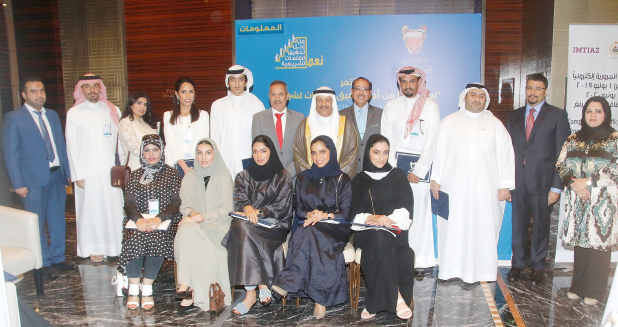
THIRTY recommendations to improve Bahrain’s laws were issued at the end of a two-day conference in Manama yesterday.
They include reviewing the country’s borrowing policies, investing in artificial intelligence for education, amending legislation to allow more medical investment, removing legislation that restricts gender equality, establishing a strong platform for small and medium enterprises, and reducing dependence on the expatriate labour force.
The conference at the Four Seasons Hotel Bahrain Bay was attended by members of the National Assembly, government officials, community leaders and municipal representatives.
Held under the patronage of Shura Council chairman Ali Saleh Al Saleh, the ‘Together to Achieve Legislative Aspirations’ Conference focused on striking up partnerships with various stakeholders to lay the foundations for new and existing laws.
Priority was given to legislation involving the labour market, gender equality, education, health and government services.
“When we intended to have the conference we were seeking feedback from the community on how legislators could do things better and speed up things,” said Mr Al Saleh.
“The government took the initiative and asked to be in to ensure we all partner together to come up with policies and measures that are, without doubt, beneficial and agreed on.
“Even judges have come on board out of interest and their input has been highly positive. This will certainly help us draw up future legislation.”
He said the recommendations to come out of the conference could result in new bills and amendments.
“The concepts we have as recommendations should be met with amendments to existing legislation, laws that need a real rethink, and new ones we may need,” said Mr Al Saleh.
Shura Council financial and economic affairs committee chairman Khalid Al Maskati said any changes had to take into account Bahrain’s ongoing austerity push and efforts to diversify the economy.
“We have to work in line with the Fiscal Balancing Programme and it will remain slow if we don’t support it with legislation that enables it to achieve the intended target – equilibrium between spending and revenues in 2022,” he said.
“The government continues to be 80pc reliant on oil and the shift towards diversifying revenue is taking time, despite the introduction of new projects and programmes.
“The programme is moving fine, but we could support it by giving the private sector a bigger role – and allowing the government to become more of a regulator.”
Meanwhile, Shura Council affairs director at the Parliament and Shura Council Affairs Ministry, Dina Al Fayez, welcomed talk of new laws to improve the landscape, as well as close partnerships between the government and legislators.
“New legislation is required that take into account future needs,” she added.
The 30 recommendations presented yesterday are:
First scope (national budget and investment opportunities):
- Diversify sources of income to increase revenue through the establishment of new sectors
- Increase revenue in ministries and government bodies without affecting the public
- Stop overspending and review approved funding
- Review borrowing policies
Second scope (Fiscal Balancing Programme and strategic approach):
- Draw up clear deadlines to reach fiscal equilibrium
- Support initiatives to enable balancing while maintaining growth and sustainability
- Support the private sector in finding new job opportunities for Bahrainis
- Establish a strong platform for small and medium enterprises
Third scope (supporting the labour market and developing small and medium enterprises):
- Find real solutions for unemployment by reviewing existing legislation
- Reduce dependence on expatriate labour force, only allowing them employment in required jobs
- Provide Bahrainis with disabilities job opportunities in the private sector
- Find solutions to prevent bankruptcy and closure of small enterprises
- Separate education and training, and introduce special legislation for both
Fourth scope (education expectations and challenges):
- Support local researchers
- Establish a national teachers day
- Restructure curricula to help graduates prepare for the labour market
- Invest in educational artificial intelligence
Fifth scope (quality government services):
- Introduce innovative ways to provide government services
- Offer government services through private investors while protecting information security
- Introduce new legislation for electronic government
- Conduct regular assessment of services
Sixth scope (health challenges and aspirations):
- Amend legislation to allow more medical investment
- Introduce new legislation and programmes for medical tourism
- Ensure availability of all necessary medicines
- Conduct regular medical examinations on expats
Seventh scope (gender equality):
- Remove all restrictive legislation that prevents gender equality
- Enable a competitive nature between men and women in leadership posts
- Draw up new development plans for women empowerment
- Provide new opportunities for women
- Train personnel in the judicial authority (judges, lawyers and prosecutors) in adopting unbiased behaviour based on gender
mohammed@gdn.com.bh
&uuid=(email))