

A KEY forum to discuss the illicit trafficking of antiquities through the Middle East will be held on Thursday.
The virtual forum is being organised by the Bahrain Authority for Culture and Antiquities (Baca), in co-operation with the US State Department and the US-based The Antiquities Coalition.
Entitled: ‘Strengthening Bilateral Relations to Combat Illicit Trafficking in Cultural Property’, the event will feature live panel discussions in which experts will talk about the important role played by culture in enhancing global security.
“Government leaders and prominent figures from the culture and arts sector – from Bahrain and the US – will take part in the dialogue to discuss the challenges facing efforts to combat crime related to cultural property,” stated Baca yesterday.
The webinar is in line with growing global interest in the subject as the region has witnessed an increase in the movement of stolen treasures due to conflicts.
The GDN previously highlighted concerns by experts that Gulf states were at the risk of being used as a transit point for smuggled antiquities by militant groups.
Hauls of stolen relics, particularly from Iraqi museums, have been generating large sums of money for terror groups.
Archaeologist Dr St John Simpson, who is a former Bahrain resident and assistant keeper of the British Museum’s Middle East Department, in an interview with this newspaper, said criminals were using Bahrain as a transit point to ship fake antiquities to unsuspecting private collectors abroad.
Fake
He added that while gangs have used conflicts in the Middle East to loot ancient relics and heritage items, other fraudsters have been busy running workshops in the region to make worthless fake artefacts.
Dr Simpson highlighted a high-profile case involving two metal trunks that arrived at Heathrow Airport on July 1 2019 on a flight from Bahrain, destined to a private address in the UK.
Suspicious, the UK Border Force agents opened the trunks and thought they had intercepted a consignment of Mesopotamian antiquities, protected by cardboard and bubble wrap.
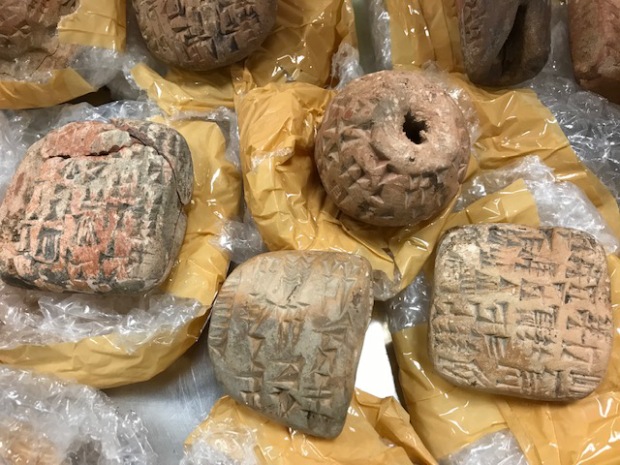
However, on closer examination the British Museum experts found that the 190 artefacts were, in fact, fake.
Hundreds of clay tablets covered in cuneiform script (the early form of writing invented by the Sumerians some 6,000 years ago), fired clay figurines, cylinder seals and rather unusual and imaginative animal-shaped pots were seized.
The objects were taken to the museum for closer expert identification and suspicions arose almost immediately as the ‘cuneiform’ tablets seemed to represent a virtually complete range of basic types known from ancient Mesopotamia.
They found the inscriptions on the clay tablets were a jumble of signs, some invented, others upside-down, a complete mish-mash which made no sense to the curators, while the clay was clearly the product of a modern workshop.
Another report published by the GDN in 2015 revealed that a shipment, containing a rare archaeological piece from Lebanon, was intercepted by eagle-eyed Customs officials of Bahrain.
sandy@gdn.com.bh
&uuid=(email))