

Experts have called on all individuals, especially athletes, to keep getting screened to reduce the risk of sudden cardiac death (SCD) and other heart diseases.
The Sports Cardiology Congress’ chairman Dr Adel Khalifa spoke to the GDN on the sidelines of the three-day event and highlighted the importance of detecting red flags in time.
Although the risk of sudden death is low, affecting only 1 in 40,000 to 1 in 80,000 athletes, he noted that the impact of even one such incident is devastating because of the high visibility of sports personalities, adding that it could discourage others from participating in sport.
“We encourage people to participate in regular physical activity but often times, if they have an underlying condition, it can emerge during intense activity,” he added.
He stressed that it’s not exertion but rather these underlying conditions that cause SCD and voiced his hopes that recommendations from the weekend would lead to guidelines about how often athletes get screened for SCD risk factors.
The GDN reported in 2019 that Shaikh Nasser first ordered a probe into an alarming increase in sudden deaths. At the time, Shaikh Nasser gave directives to study the technical design of walkways, playgrounds and stadiums, as well as environmental conditions surrounding them.
In 2017, a government-appointed committee was set up to investigate two deaths that happened within a week of each other at a gym in Tubli.
In 2018, a 35-year-old Bahrain father-of-three died while playing football at Malkiya Club after suffering a heart attack. He was taken to the Kuwaiti Health Centre in Karzakan where efforts to resuscitate him failed. And, last year, another Bahraini man suffered a heart attack and died while playing football in Adhari village.
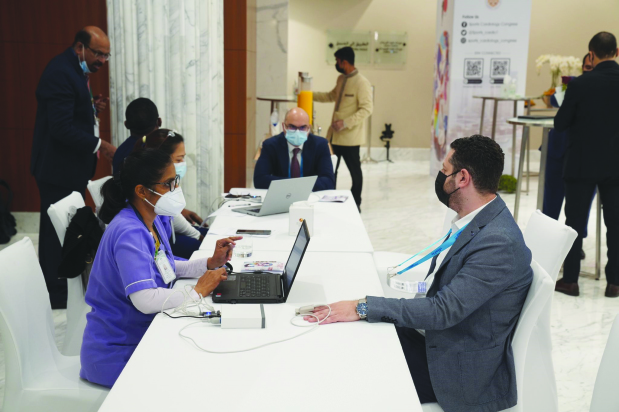
At the sidelines of the congress, screening was available to help delegates identify if they were at risk of SCDs. The screening, done in partnership between Soza Health UK, Bahrain-based Dhu3 and the American Mission Hospital, is a shortened version of its holistic assessment.
As part of it, the arterial health test shows the ageing of blood vessel and peripheral blood circulation, while the autonomic nerve and stress test analyses heart beat to asscertain physical and mental stress levels.
&uuid=(email))