

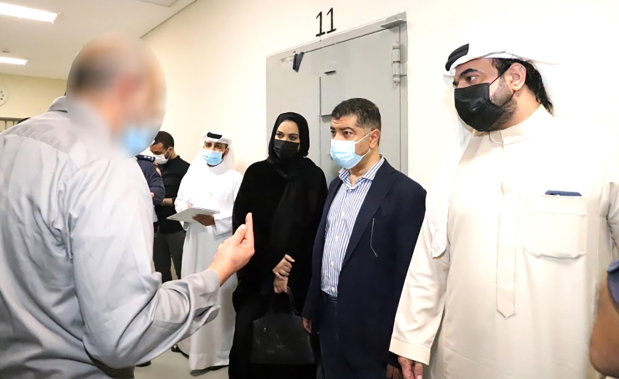
A delegation from the Council of Commissioners at the National Institution for Human Rights (NIHR), led by Ali Ahmed Al Derazi, has been informed about the organisational measures taken in the reform and rehabilitation centres to enable inmates to practise their religious rites during Ashoora.
The steps were taken in a manner that does not prejudice the security and safety of the inmates, and does not constitute harm or infringement of the freedom and privacy of other inmates from other religions and sects.
During announced visits to the Jaw Rehabilitation and Reformation Centre and Dry Dock Detention Centre for several days, the delegation found that Ashoora commemorations at the centres were held smoothly and freely.
The NIHR’s delegation held extensive meetings with the centres’ officials, who briefed it about the regulations in place during the commemorations.
The members of the delegation toured the centres’ buildings and wards, where they met some inmates, chosen randomly, and asked them about their living conditions, the extent to which they enjoy the freedom to perform their religious rituals, in addition to their health conditions and the treatment they receive.
The delegation was also briefed on the facilities provided by the centres’ managements, which enabled the inmates to perform their religious rites comfortably on time and in accordance with the provisions set by the Reformation and Rehabilitation Law and its executive regulations. It also watched the recordings of the buildings’ security cameras which indicated that everything went on normally.
The delegation’s visits revealed that the freedom to practise religious rites and perform worship is guaranteed for inmates, as the managements of the centres provided designated places with sufficient space for practising religious rites collectively, commensurate with the number of inmates.
Banners and written slogans for these rites were placed in the same place, a television to transmit religious events was available, and books and religious supplies for practising various acts of worship were also provided.
Places for Hussaini Majlises, attended by Rawadeed, were also provided to the inmates.
The visits are based on the NIHR’s human rights and supervisory roles, as stipulated in its terms of reference, Mr Al Derazi said.
He highlighted the measures taken by the managements of the two centres to facilitate the commemoration of the Hussaini rituals for the inmates during Ashoora, including the application of precautionary health measures and the provision of first aid services and a doctor on duty in the clinic, while doubling the period of practising rituals on the 10th of Muharram, as requested by inmates.
Mr Al Derazi commended the Interior Ministry’s continuous co-operation with the NIHR and its response to requests for announced and unannounced visits to correctional and rehabilitation facilities.
&uuid=(email))