

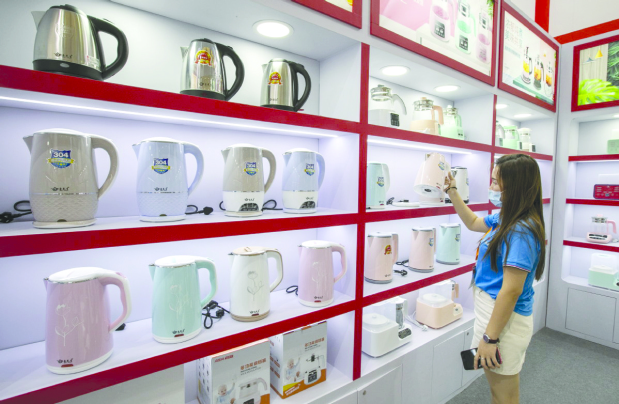
TRADERS could be required to better publicise the robustness, durability and compatibility of electrical appliances sold in hypermarkets, supermarkets and electrical appliances shops.
MPs believe consumers ought to be given more information related to power and water usage, strength and eco-friendliness so they don’t end up buying circuit-breaking, or worse still, cable-frying items.
“Currently rules ensure electronic items don’t pose a risk to health, safety or the environment,” said Parliament’s public utilities and environment affairs committee vice-chairman Ahmed Al Demistani, “but they need to go much further than that to allow for informed purchasing decisions to be made.
“The issue of robustness, durability and compatibility have yet to be taken into account.
“At the moment there is a genuine risk that people will unwittingly buy the highest voltage washing machines, or vacuum cleaner, thinking it’s the best only to get home and find their home electricity circuit is unable to withstand it,” he added.
“This additional and useful information could easily be made available through a QR code placed alongside the price tags on display at all hypermarkets, supermarkets and electrical appliances shops.
“Such information on power and water usage, strength and eco-friendliness should be a public right. It would certainly help ensure that vital energy is saved and there are no potential hazards.”
Domestic fans, refrigeration and freezing equipment, washing machines and dryers, food grinders and mixers, fruit and vegetables extractors, toasters, electro-thermic hair-dressing apparatus, hand dryers, air conditioning units and irons, among other appliances, already have to abide by specific regulations before they are sold in the market but the rules don’t go far enough, according to campaigners.
The Gulf Unified Regulation for Low Voltage Electric Equipment and Appliances, approved back in 2014 by the GCC Standardisation Organisation, has been adopted in Bahrain.
The regulation includes articles such as obligations of economic operators, conformity of electrical equipment, obligation of member states and administrative provisions.
Upgraded electrical appliance regulatory programmes have already been implemented in many countries including Brazil, Russia, Singapore and China. MPs are requesting the Industry and Commerce Ministry to follow suit and lay down the law to traders.
Committee chairman Khalid Bu Onk backs the new information drive too.
“Buying an electrical appliance without all the information at hand can be disastrous,” he explained. “Many people spend huge sums of money to buy what they think is the best brand believing that it will last them for years before needing to be replaced. However, they are shocked it doesn’t last a month and the reason is that their home electricity circuit cannot cope.”
Electrical circuits are designed to handle a limited amount of electricity. Circuits are made up of wiring, a breaker and the devices – anything plugged into an outlet.
The electricity usage of each device, when running, adds to the total load on the circuit. Exceeding the rated load for the circuit wiring causes the circuit breaker to trip, shutting off the power to the entire circuit.
If there were no breaker in the circuit, an overload would cause the circuit wiring to overheat, which could melt the wire insulation and lead to a fire.
The GDN earlier reported about an alert that was issued over the potentially lethal consequences of overloading power supplies, following a spate of fires caused by short circuits.
Three people were treated by ambulance crews for smoke inhalation and minor burns following a fire in an apartment in Howrat A’ali on Saturday.
Initial investigations carried out by the Civil Defence indicate the blaze was started by an electrical fault, said the Interior Ministry.
mohammed@gdnmedia.bh
&uuid=(email))