

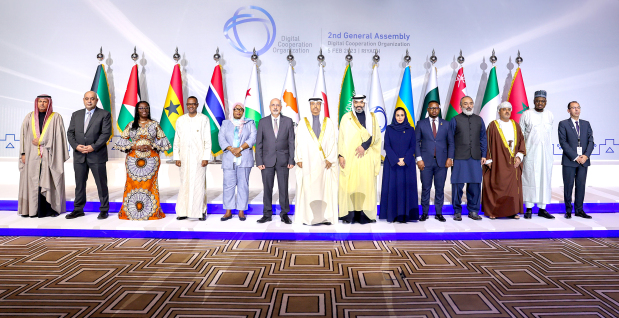
Bahrain has assumed the 2023 chairmanship of the Digital Co-operation Organisation (DCO), which is targetting 30 per cent share of the global digital GDP (gross domestic product) and 30 million new jobs by 2030 as part of a new roadmap unveiled in Riyadh yesterday.
As the chair, the kingdom will host the global multilateral organisation’s next general assembly meeting in December, said a joint ministerial declaration issued after the first in-person meeting of the DCO member states was held in the Saudi capital.
Reading out the landmark joint statement on behalf of 13 member countries, DCO secretary-general Deemah AlYahya said, “We aspire to achieve ‘30 by 30’, an ambitious future where the digital economy could contribute 30pc of the global GDP and create 30m jobs by 2030.
“Over the past two decades, the digital economy has grown at an unprecedented rate to become the backbone of our societies and an essential part of achieving sustainable development. With the abundance of opportunities, however, the digital economy also brings formidable challenges, including global data flows and privacy, data sovereignty, regulations, markets, innovation, sustainability, and other factors that may hinder future economic growth,” she said, adding, “Only through multilateral and multi-stakeholder co-operation can we address the challenges, make the most of the opportunities, and create a more inclusive and effective digital economy.”
Ms AlYahya also announced the induction of The Gambia and Ghana as the organisation’s newest members joining Bahrain, Cyprus, Djibouti, Jordan, Kuwait, Pakistan, Oman, Nigeria, Rwanda, Morocco, and Saudi Arabia, taking its collective represention to nearly $2 trillion in GDP and a market of nearly 600 million people, more than 70pc of whom are under the age of 35.
Also present during the organisation’s call to action was Bahrain’s Transportation and Telecommunications Minister Mohammed Al Kaabi who exclusively told the GDN that the DCO’s key initiatives are in sync with the kingdom’s digital transformation strategy that seeks to attract leading companies in the field of advanced technology, provide world-class digital infrastructure, and enhance and increase the efficiency of e-government services.
Mr Al Kaabi said under the 2022-26 roadmap, Bahrain is working to increase the number of ICT start-ups by 20pc, digitalise an additional 200 government services, boost the employment of Bahrainis in the ICT sector by 35pc, equip 20,000 nationals with cybersecurity skills and achieve 100pc broadband network coverage.
Founded in November 2020 with its headquarters in Saudi Arabia, the DCO seeks to achieve equitable global digital growth and development for its member states through collaboration and knowledge sharing.
Key among its initiatives that seek to enhance cross-border data flows, promote market expansion for SMEs, empower digital entrepreneurs and advance digital inclusion among women and youth, is the Startup Passport launched last year in a bid to make it quicker, easier and less expensive for startups to do business across borders.
avinash@gdnmedia.bh
&uuid=(email))