

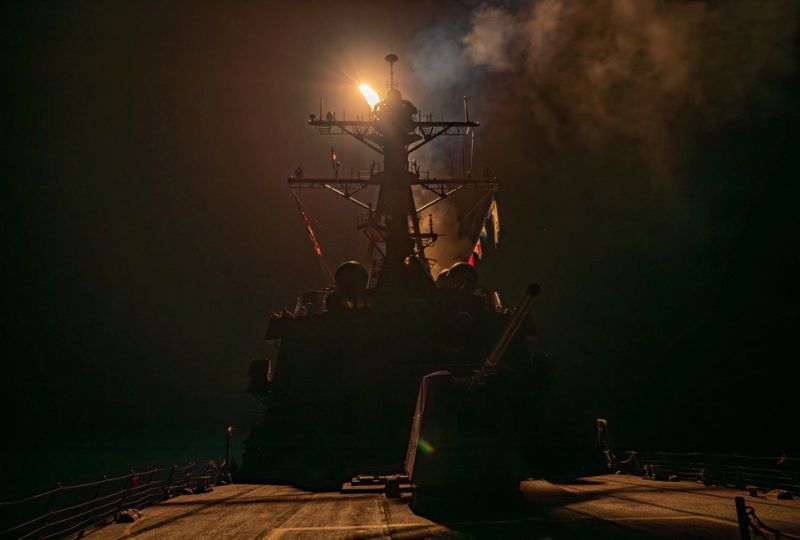
The US launched new strikes against Houthi anti-ship missiles aimed at the Red Sea yesterday.
The two Houthi anti-ship missiles targeted in the strikes were being prepared for firing into the Red Sea and deemed “an imminent threat” to shipping and US Navy vessels in the region, the US military said.
Attacks by the Iran-allied Houthi militia on ships in and around the Red Sea since November have slowed trade between Asia and Europe and alarmed major powers in an escalation of the war between Israel and Hamas in Gaza.
The Houthis say they are acting in solidarity with Palestinians and have threatened to target US ships in response to American and British strikes on the group’s positions.
The strategy pursued by US President Joe Biden – a blend of limited military strikes and sanctions – appears aimed at preventing a wider Middle East conflict even as Washington seeks to punish the Houthis, security and military experts say.
Biden yesterday acknowledged that the strikes had not halted attacks by the militants but said the US military response would continue.
“Are they stopping the Houthis? No. Are they gonna continue? Yes,” Biden told reporters aboard Air Force One.
In the latest sign that Houthi attempts to attack ships continue unabated, British maritime security firm Ambrey said a Marshall Islands-flagged, US-owned tanker reported four unmanned aerial vehicles approached and circled the vessel, approximately 87 miles southeast of Yemen’s Mukalla.
“One of the UAVs reportedly fell into the water. No damage or injuries were reported. The tanker was not impacted and continued its voyage,” Ambrey said in an advisory note.
Following the attack on the Genco Picardy, the US military said its forces had conducted strikes on 14 Houthi missiles on Wednesday that “presented an imminent threat to merchant vessels and US Navy ships in the region”. Yesterday’s strikes were similar to those on Wednesday, White House national security spokesperson John Kirby told reporters aboard Air Force One.
The attacks target a route that accounts for about 15 per cent of the world’s shipping traffic and acts as a vital conduit between Europe and Asia.
The alternative shipping route around South Africa’s Cape of Good Hope can add 10-14 days to a journey compared to passage via the Red Sea and Suez Canal.
A sharp downturn in revenue from the Suez Canal has struck a painful new blow to Egypt’s already deteriorating economy. The chairman of the Suez Canal Authority said last week that revenue had fallen by 40pc in the first 11 days of January.
Wheat shipments via the Suez Canal tumbled almost 40pc in the first half of January.
&uuid=(email))