

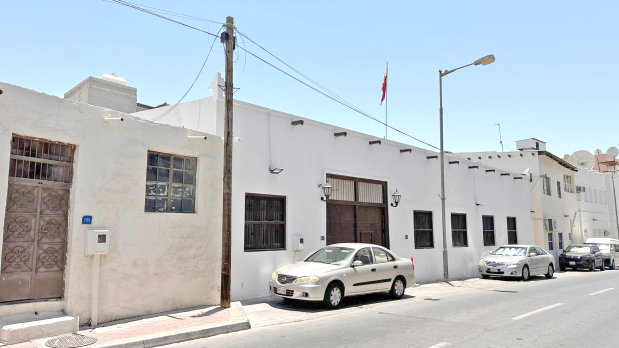
Residents of hundreds of rundown homes in the Muharraq Governorate are allegedly refusing to renovate their homes according to heritage specifications and threatening to knock them down themselves.
Homes in the historic Muharraq, Hidd and Arad neighbourhoods are under the protected list, which means the Muharraq Municipality cannot grant their owners permission to bulldoze and rebuild them.
The Bahrain Authority for Culture and Antiquities (Baca) has also banned owners of these houses from demolishing the buildings due to their historical importance.
Muharraq Municipal Council chairman Abdulaziz Al Naar alleged that contractors were offering to do renovation work at ‘three times the actual cost’, adding to residents’ misery.
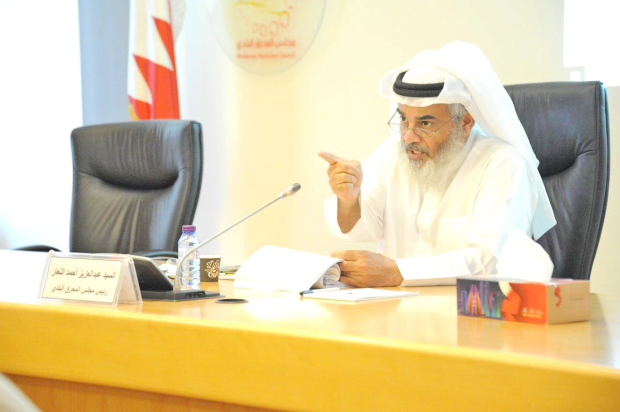
Mr Al Naar
He claimed that several residents do not want to live in homes that cannot be revamped to modern standards, others complain their homes cannot accommodate their expanding families and some want to build multi-storey commercial or apartment buildings to make a living.
Suffering
“It should be clear to everyone that Baca is unable to buy back the homes or fund renovation, except those located on the old Muharraq Pearling Path, which has been granted World Heritage Site status by the UN,” said Mr Al Naar.
“I understand the residents’ suffering. They are being forced to live in rundown homes and can renovate them only according to Baca specifications.
“Contractors who know that owners of these homes have been given exceptional permission quote three times the rates charged for demolishing homes and rebuilding them using modern technology.
“Many people are now threatening to tear down their homes themselves in a bid to force authorities to grant them permission to rebuild and expand. They want to make space for their children, even though they may face a lengthy court battle that would see them fined at least BD1,000.”
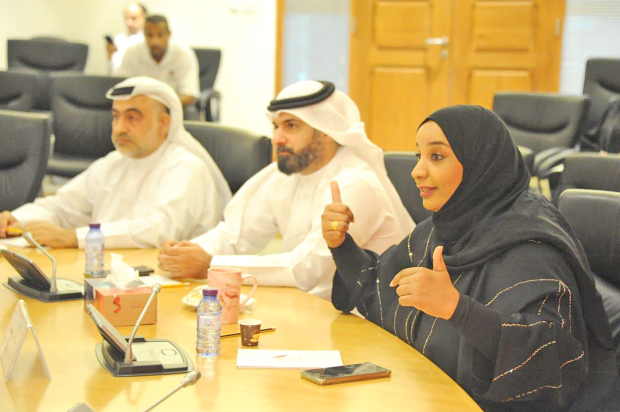
Ms Al Meghawi, right, with fellow councillors
Councillor Dalal Al Meghawi said ‘history showcases civilisation’ and it would be wrong to allow any home to be torn down.
“I understand that 1,300 homes are being shortlisted. I believe that half the number, or even less, are of value but Baca is taking time to carry out inspections because it has only one specialised person for making assessments,” she said.
“Baca could allow demolition of a home and later realise it was valuable and as a precautionary measure it has put a ban on the 1,300 homes in old Muharraq, Hidd and Arad neighbourhoods.
“Some of the homes on the banned list are just 50 years old. It is not about how old the homes are, but their significance; there are homes which are 200 years old.
“Most of them are in appalling conditions and are full of insects and rodents.
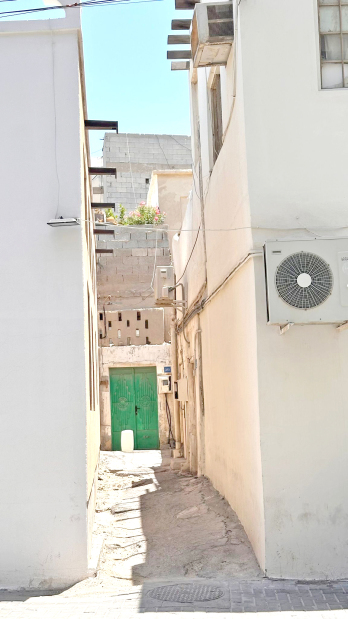
Old homes in Muharraq
“We have tried to get Baca and owners to share the renovation costs, but no resolution has been reached on that. One party is extremely slow and the other is impatient.”
Baca was given the go-ahead in 2016 to take a $48 million loan from the Islamic Bank for Development to fund the initiative which will involve buying properties from homeowners and turning them into cultural attractions.
A total of BD10m has been set aside in the national budget to fund the Pearling Path project, which highlights Bahrain’s traditional pearling industry.
Baca has since been working to acquire 200 properties for the project, while owners of other properties will be able to continue living there.
In 2011, the same council threatened to demolish dozens of homes unless proper remodelling was carried out, even as the World Heritage Site application to Unesco was being considered. It backed down when the location received World Heritage Site status a year later.
Old Muharraq is set for a massive revamp in line with Royal Orders by His Majesty King Hamad at the opening of the National Assembly’s second session of the sixth legislative term earlier this month.
Housing and Urban Planning Minister Amna Al Romaihi revealed earlier that the Muharraq City Development Plan included developing an area measuring approximately 1.4 million square metres, restoring 16 buildings of heritage value and completing the Pearling Path for cultural and tourism activities.
The plan also envisages increasing the green area in the region and diversifying its afforestation, by providing 72 green squares covering an area of 12,000sqm to plant 100,000 trees, and developing traffic and pedestrian corridors with a length of 48sqm, in addition to providing parking lots to accommodate residents and visitors to the areas.
The minister said the project included the construction of 2,000 housing units to meet the aspirations of Bahraini families, pointing out that the ministry will start restoring and building 300 housing units.
The project’s executive plan also included the launch of a tender to appoint a consultant for the project. Development work procedures will begin in November with expropriations and detailed designs completed by December. Construction work is set to begin in October next year with all project phases completed and delivered by December 2026.
mohammed@gdnmedia.bh
&uuid=(email))