

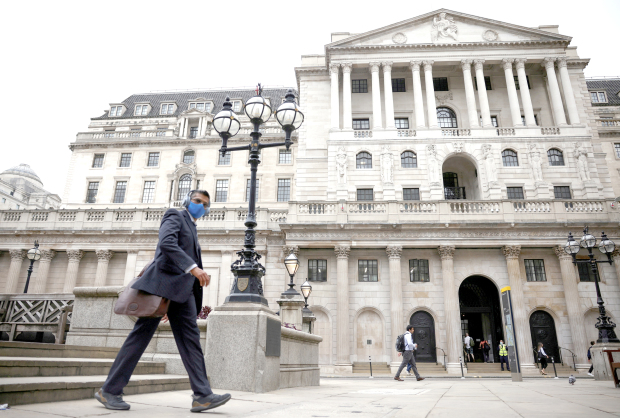
The Bank of England cut interest rates from a 16-year high yesterday after a tight vote by its policymakers who were split over whether inflation pressures had eased sufficiently.
Governor Andrew Bailey led the 5-4 decision to reduce rates by a quarter-point to 5 per cent and he said the BoE would move cautiously going forward.
It was the central bank’s first cut since March 2020, at the start of the Covid-19 pandemic, giving Britain’s new government a boost as it seeks to speed up the pace of economic growth.
But Bailey stressed the BoE was not committing to a series of quick reductions in borrowing costs.
“We need to make sure make sure inflation stays low, and be careful not to cut interest rates too quickly or by too much,” he said in a statement.
Most economists polled by Reuters had expected a cut while financial markets had seen just over a 60pc chance.
Sterling slipped to its lowest against the US dollar since early July and bond yields also fell slightly after the BoE’s announcement with the yield on 10-year gilts touching its lowest since March.
Bailey insisted the BoE would take its decisions on rates “from meeting to meeting” but investors were betting on another rate cut this year with the chance of a move at its next meeting in September seen as a roughly 55pc probability.
“The Bank of England is staying tight-lipped on when it expects to cut rates again,” ING economist James Smith said. “But we think better news on services inflation and wage growth can unlock one, or more likely two rate cuts by year-end.”
Borrowing costs had been on hold for almost a full year – the longest period they have been left unchanged at the peak of a BoE tightening cycle since 2001.
In June, the BoE’s Monetary Policy Committee voted 7-2 to keep rates on hold. Minutes of the August meeting showed the decision to cut them was “finely balanced” for some members.
None of the policymakers whose votes changed the balance – Bailey and Deputy Governors Sarah Breeden and new MPC member Clare Lombardelli – had spoken publicly about monetary policy since June.
Speaking opportunities had been limited by the July 4 election which brought the Labour Party to power.
The BoE said policymakers had been briefed on this week’s announcements of big public-sector pay increases and on fiscal policy, but their impact would only be incorporated into the BoE’s forecasts after the October 30 budget.
Finance minister Rachel Reeves welcomed the rate cut but said millions of families still faced higher mortgage rates and she reiterated her plan to “fix the foundations of our economy after years of low growth.”
British consumer price inflation returned to the BoE’s 2pc target in May and stayed there in June, down from a 41-year high of 11.1pc struck in October 2022.
&uuid=(email))