

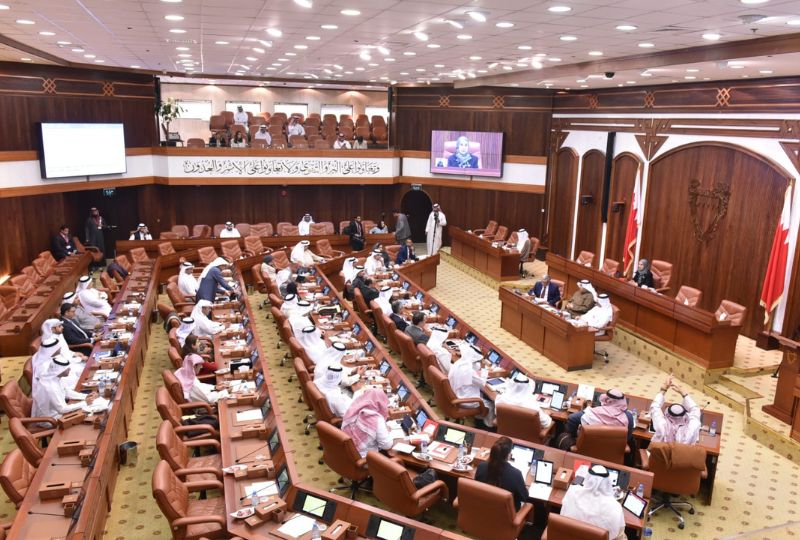
A parliamentary probe panel has called for the setting up of government-owned manpower agencies, under Bahrain Mumtalakat Holding Company, to streamline labour supply for ministries and state entities.
It’s among 22 recommendations outlined by the committee that investigated alleged manpower and employment contract violations in ministries, government bodies and companies over the past year.
The panel that came up with 21 findings said the elimination of certain roles in government structures, such as security guards, drivers and couriers, had led to increased reliance on external contracts.
It also highlighted the Voluntary Retirement Scheme, stating that the programme resulted in vacancies in government entities, leading to greater reliance on manpower agencies to fill the essential roles.
The probe committee, chaired by MP Mohammed Al Rifai, said their recommendations aim to enhance governance, promote Bahrainisation and improve the efficiency and transparency of public sector operations.
The panel believes it would be more feasible to have a government company provide manpower to ministries and government bodies. “Manpower agencies and suppliers are making huge money from their contracts, while paying lowly wages to those they send to do government jobs,” it said.
It also stressed the need to mandate minimum Bahrainisation quotas for worksupply agencies, particularly for continuous roles, to prioritise jobs for citizens.
The members also suggested revising the Bahrainisation percentages set by the Labour Market Regulatory Authority for companies and raising quotas where qualified Bahrainis are available. They stressed the need to replace non-compliance fees with tougher penalties to enforce adherence.
The committee highlighted the importance of implementing the recommendations from the NAO reports over the last three years that align with its scope of work.
Other recommendations include:
* Issuing a new, advanced law to regulate government tenders and procurement, aligning with international standards.
* Increasing the number of staff at Tender Board to handle the growing workload. The panel has called for training and capacity-building to ensure effective oversight of tenders and auctions, enhancing transparency and integrity in the process.
* Activating Tamkeen wage support programmes for Bahrainis employed through workforce supply companies. Priority should be given to companies hiring and supplying Bahraini nationals, enabling them to benefit from the Labour Fund’s support schemes.
* Adopting practices similar to Bapco Energies by awarding extra points during technical evaluations to companies that exceed Bahrainisation rates, employ Bahrainis in project management, and hire them for senior roles.
* All ministries and government companies should set up independent entities or mechanisms to monitor the actual need for workforce supply contracts.
* Reviewing the organisational structures across government entities. This includes reinstating abolished roles, such as security guards, drivers, and office boys.
* Reducing reliance on external contractors in sensitive fields like IT and cybersecurity. The committee recommends creating permanent positions for IT and advisory roles within government entities.
* Reserving jobs in the private sector for Bahrainis, especially in security, human resources and IT.
* Workforce supply companies should implement short-term plans to train and replace foreign workers with qualified Bahrainis, particularly in roles that match the skills and capabilities of local citizens.
* The Finance and National Economy Ministry should develop mechanisms for stricter monitoring of contracts funded through project budgets, ensuring effective allocation and use of resources.
* Co-ordinating with the Sunni Endowment Directorate to localise the roles of imams and muezzins, ensuring these positions are held exclusively by Bahrainis.
* All government entities and companies should include employees hired through permanent and direct contracts in social security schemes, guaranteeing equitable treatment and benefits.
* An independent parliamentary committee should be formed to examine governance and contract-related issues within Alba.
* All government companies with more than 50pc state ownership should be subject to Bahrain’s procurement law to ensure accountability in their operations.
* Companies must sustain Bahrainisation compliance throughout the contract term, rather than rely on short-term certifications valid only at the tender’s initiation.
* The Sunni and Jaffari Endowment Directorates should continue to be exempt from the procurement law for religious matters. However, administrative and employee-related needs should fall under the law’s provisions.
&uuid=(email))