

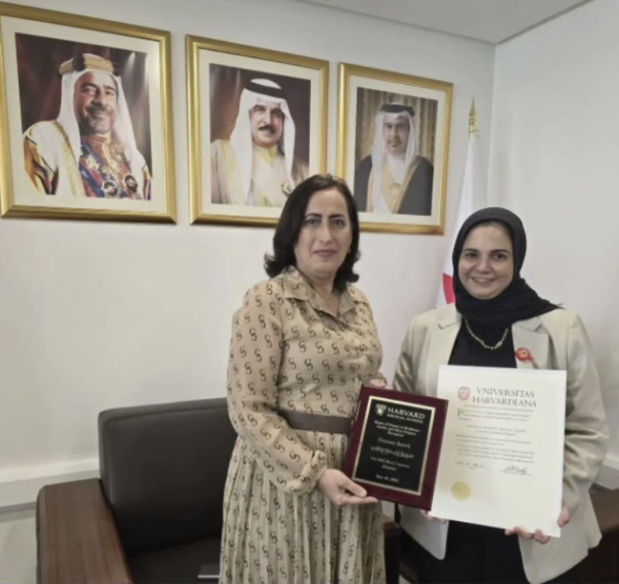
An award-winning Harvard project by a Bahraini doctor could help cut the average turnaround time for critical heart attack testing at Bahrain’s largest public hospital, potentially saving the lives of many patients, it has emerged.
Salmaniya Medical Complex (SMC) pathology department chairperson Dr Nermin Saeed’s study involved multiple strategies to boost laboratory efficiency – which resulted in successfully reducing Troponin-1 test turnaround time from 90 minutes to under 60.
It included introduction of new methods for blood testing, redesigning workflow and collaborating with several departments to fast-track the process.
A troponin test looks for the protein troponin I and troponin T in blood.
Normally, troponin stays inside heart muscle’s cells, but damage to those cells – from a heart attack or other cardiac conditions – causes troponin to leak into the bloodstream. Higher levels of troponin in blood also mean more heart damage, which can help healthcare providers determine the severity of a heart attack.
Quicker blood results can lead to faster diagnosis and treatment of heart damage.
Dr Saeed’s project – Optimising Turnaround Time for Troponin-l Testing: Improving Critical Patient Outcomes though Salmaniya Medical Complex Laboratory Efficiency – formed the final phase of her Master of Science in Healthcare Quality and Safety course at the US-based Harvard University. The project won the 2025 Best Capstone Award, highlighting its importance in enhancing diagnostic efficiency.
“To improve the system and enhance patient safety, we first needed to identify the biggest challenges,” Dr Saeed told the GDN.
“We discovered several issues in how blood tests were being collected and submitted, which often caused delays in reaching the laboratory. Also, once the samples reached the lab, they were not always tested in order of priority.
“The key was to prioritise – determining which samples are critical and need immediate testing, and which can safely wait a bit longer. Not every sample requires the same urgency.”
She explained that introducing coloured bags to indicate the urgency of each test would help reduce turnaround times, benefiting both the laboratory and patients.
“When we implemented coloured bags and other measures at SMC, the average turnaround time for Troponin-1 tests dropped from 90 minutes to 60,” she said.
“We need to acknowledge the problems and bring more people together so we can work collectively to resolve issues and improve patient safety.”
The medic highlighted the importance of stronger collaboration between departments to address challenges.
“It was an incredible feeling to have my project selected as the winning one, and I hope we can continue working as a team to keep patient safety at the heart of everything we do,” she said.
“I also hope my project encourages people to join hands. If we work as a collective, we can improve several issues.”
Dr Saeed is also a medical microbiology associate professor at the Royal College of Surgeons in Ireland-Bahrain (RCSI-Bahrain).
The Master of Science in Healthcare Quality and Safety at Harvard is one of the most globally respected programmes, aimed at equipping healthcare leaders with advanced skills in quality improvement, patient safety, data analytics and systems leadership.
Graduates of the programme are positioned to drive change, lead interdisciplinary teams, and implement high-impact solutions to complex healthcare challenges.
julia@gdnmedia.bh
&uuid=(email))