

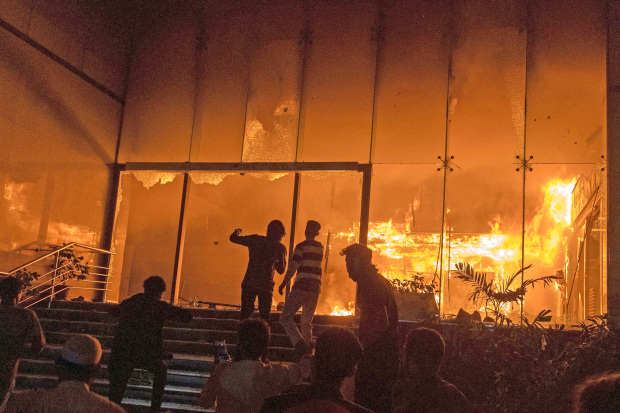
Bangladesh’s interim government urged people yesterday to resist violence as soldiers and police fanned out across Dhaka and other cities following protests over the killing of a popular youth leader, sparking fears of more unrest ahead of national elections in which he had been due to run.
The Muslim-majority nation of about 175 million people is due to elect a new parliament in less than two months’ time – a transition many hope will help the country recover from nearly two years of instability and reclaim its position as a South Asian development success story. Frequent bouts of violent protests and political wrangling among disparate groups including Islamist hardliners have, however, punctured the national sense of euphoria that arose after student-led protests toppled powerful leader and long-time Prime Minister Sheikh Hasina in August 2024.
It has also exposed the limitations of the interim government headed by Nobel laureate Muhammad Yunus, analysts said, raising questions over his grip on governance in the world’s second-largest apparel producer after China. Hasina’s party, the Awami League, which has been barred from the February 12 vote, has threatened unrest that some fear could derail the election itself.
Youth leader Sharif Osman Hadi, 32, was shot in the head by masked assailants in Dhaka last Friday while launching his campaign for the elections. He was a spokesperson for the Inquilab Mancha, or Platform for Revolution, and participated in the protests that overthrew Hasina.
Hadi, an outspoken critic of India as well, was initially treated at a local hospital before being flown to Singapore for advanced medical care, where he died after six days on life support.
In Dhaka, videos circulating on social media showed mobs vandalising the offices of the country’s largest daily newspaper, Prothom Alo, as well as the Daily Star, on Thursday night.
The fire service said the blaze at the Daily Star was under control. Troops were deployed to the scene, and firemen rescued journalists trapped inside the building.
Violence was also reported in a number of cities across Bangladesh, including the port city of Chittagong, where protesters attacked the Indian Assistant High Commission.
The unrest follows fresh anti-India protests this week, with ties between the neighbours deteriorating since Hasina fled to Delhi. On Wednesday, hundreds of demonstrators marched toward the Indian High Commission in Dhaka, chanting anti-India slogans and demanding Hasina’s return.
Although calm had returned to much of the country on Friday morning, protesters carrying national flags and placards continued demonstrating at Shahbagh in central Dhaka, chanting slogans and vowing not to return until justice was served.
The interim government urged the people of Bangladesh to resist all forms of mob violence it said were committed by a ‘few fringe elements’.
&uuid=(email))