

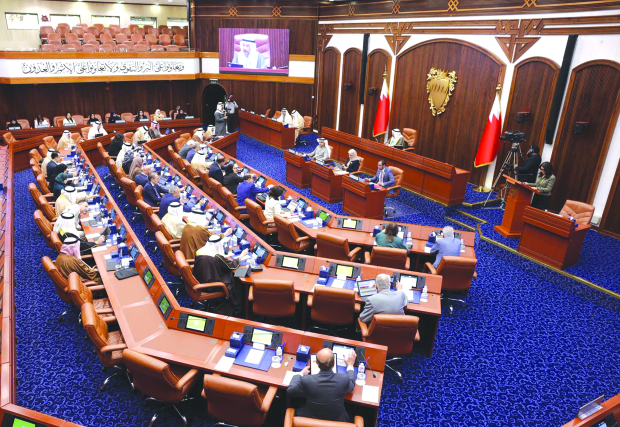
A controversial proposal to reduce settlement payments for traffic offences has been shelved after the Shura Council unanimously rejected the amendment, prioritising road safety and deterrence over leniency.
The amendment sought to revise Article 56 of the Traffic Law (Law No 23 of 2014) by allowing motorists to settle violations by paying half the minimum fine, even if the payment was delayed for up to 30 days.
The proposal, submitted by Parliament, was returned to the Shura Council under Article 84 of the Constitution after MPs insisted on its approval despite an earlier rejection by the upper chamber.
However, the Shura Council’s foreign affairs, defence and national security committee strongly recommended rejecting the bill for a second time, warning that it would undermine recently introduced tougher penalties aimed at curbing serious and fatal road accidents.
Committee chairman Dr Ali Al Rumaihi said the proposal conflicted with the core objectives of Bahrain’s Traffic Law, which prioritises public safety and the protection of lives and property.
“Any amendment must strengthen deterrence and consistency, not dilute their impact or send conflicting messages to motorists,” Dr Al Rumaihi said.
He explained that the current settlement system already strikes a careful balance, allowing offenders to benefit from a reduced settlement only if payment is made within seven days, encouraging swift compliance while easing pressure on courts and prosecutors.
“The proposed amendment removes the incentive for early payment and weakens the effectiveness of the settlement system,” Dr Al Rumaihi said. “It risks turning leniency into the norm rather than an exception.”
The committee also pointed to a direct contradiction with Decree-Law No 30 of 2025, which recently increased traffic fines to enhance deterrence following a rise in serious and fatal accidents.
“You cannot tighten penalties with one law and simultaneously dilute their effect with another,” Dr Al Rumaihi said, stressing that legislative consistency is a constitutional requirement.
The report warned that reducing settlement amounts would weaken the psychological and behavioural deterrent of financial penalties, potentially emboldening reckless driving and increasing risks on Bahrain’s roads.
Meanwhile, traffic authorities highlighted that deterrence is already balanced with awareness and positive reinforcement.
General Directorate of Traffic’s Traffic Culture Director Major Khalid Buqais said the Interior Ministry follows clear directives that place education before punishment, without compromising enforcement.
“Our approach focuses on advice, guidance and awareness before penalties,” said Major Buqais. “Deterrence remains essential, but awareness must come first.”
He noted that the General Directorate of Traffic has launched motivational programmes to encourage compliance, including digital awareness campaigns that have reached more than six million viewers, earning recognition through the Digital Government Award.
“We use positive incentives and symbolic rewards through initiatives such as ‘Thank You’, selecting participants across different age groups to promote good behaviour and role models on the road,” he said.
Major Buqais stressed that enforcement remains firm where violations persist.
“Motivation does not replace the law. It supports it. When necessary, enforcement is applied to protect everyone.”

Mr Al Aradi
While acknowledging concerns about easing the financial burden on motorists, committee rapporteur Ali Al Aradi said that public safety must take precedence over convenience.
“This is not about punishment for punishment’s sake,” he said.
“It is about preserving the effectiveness of traffic laws in protecting lives and maintaining public order.
“The Shura Council’s unanimous rejection means the amendment has now been effectively shelved, reaffirming Bahrain’s commitment to tougher deterrence and safer roads.”
Meanwhile, the Shura Council unanimously approved amendments to the 2002 Parliament Bylaws Law to allow MPs to submit their closing financial statements for auditing after three months from the end of the year rather than just one.
It has been referred to His Majesty King Hamad for ratification.
&uuid=(email))