

When news broke that Carlos Alcaraz and longtime coach Juan Carlos Ferrero had officially parted ways, it sent a ripple through the tennis world. It’s rare to see such a successful partnership dissolve without some obvious catalyst – no dramatic blow-up, no prolonged slump, no tell-all interviews. Just a quiet but monumental end to one of the most fruitful player-coach pairings.
Ferrero didn’t just help Alcaraz become a Grand Slam champion and world No. 1 – he helped mould him into the heir apparent to the Big Three. Their relationship went beyond the court; it was a mentorship grounded in trust, shared values, and a clear vision of how Alcaraz should evolve as both a player and person. That kind of bond, once severed, raises questions about what comes next.
From a purely tennis standpoint, the timing of the split was curious. Alcaraz, still just 22, has already achieved more than most players ever will, but in 2025 cracks began to show. He struggled to maintain consistency in the latter half of the season and was outgunned in some big matches. Although he ended the year as the world No. 1, it is a title that would have almost certainly gone to Sinner had he not been forced to miss three months of the season.
What is most concerning about the split is that it may not have been Carlos’s idea at all. While no official details have emerged, Ferrero posted on social media that he wished the partnership could have continued – a clear signal that the decision did not come from him. Rumours suggest the split may have stemmed from differences between Ferrero and Alcaraz’s camp, particularly his father, regarding the direction the team should take. Specifically, it may relate to the increasingly commercial nature of Alcaraz’s brand. With endorsements flooding in and his global marketability soaring, there appears to be tension between those wanting to capitalise financially, and those like Ferrero, who are more mindful of the toll that distractions can take on a player’s focus and longevity.
Ferrero has been with Alcaraz since he was a teenager and has overseen every major developmental leap in his game. He’s not just a coach, he’s been a father figure, a mentor, and the tennis brain behind the scenes. To think that a difference in commercial philosophy may have been the wedge between them is disheartening. No amount of money can replicate the bond they shared, or the level of insight and care Ferrero brought to his role.
But at the end of the day, Carlos is an adult. Whether it was his idea or not, he now owns the decision and its consequences. It’s part of the burden that comes with being a top-level professional. As the leader of his team, he must ensure the voices around him are helping him move forward, not sideways.
From a historical lens, this has echoes of other pivotal splits. Think back to Andy Murray and Ivan Lendl. When they separated the first time, Murray’s form dipped. When they reunited, he returned to his winning ways. The takeaway: not all coaches are replaceable. And when one is as closely entwined in a player’s rise as Ferrero was with Alcaraz, the impact of their departure can’t be underestimated.
The challenge now for Alcaraz is to build a new team that supports not only his tennis ambitions but protects him from the off-court noise. At the top of the game, momentum is fragile. Lose focus, and the chasing pack closes in quickly. So far Alcaraz has silenced the doubters by making his strongest start to a season yet – at the time of writing having just reached his first Australian Open final.
For the sake of all tennis fans, here’s hoping that this split, however it came about, does not affect Alcaraz’s future success on court. He has plenty of time, talent, and titles ahead of him. But when you’ve had a coach who felt like family, it’s not easy to simply start again. All eyes will be on Carlos this season, starting with tomorrow’s Australian Open final.
Coach’s Tip: Don’t be a spectator on court
One of the biggest mistakes I see at club level is players watching their shots instead of preparing for the next one. They hit the ball, admire their handiwork, and only then start moving. By the time their opponent replies, they’re off balance, out of position, or simply too late to react.
Instead, the moment your racket makes contact with the ball, your feet should already be preparing for what’s next. Recover toward your ideal court position, adjust your stance, and stay alert. Even if your shot was great, don’t assume the point is over – always assume it’s coming back. Remember, running to and hitting the ball is only half of the ‘shot’ – it is only complete once you have recovered.
This small habit shift can make a big difference in your movement and anticipation. Tennis rewards those who stay one step ahead. See you on the court!
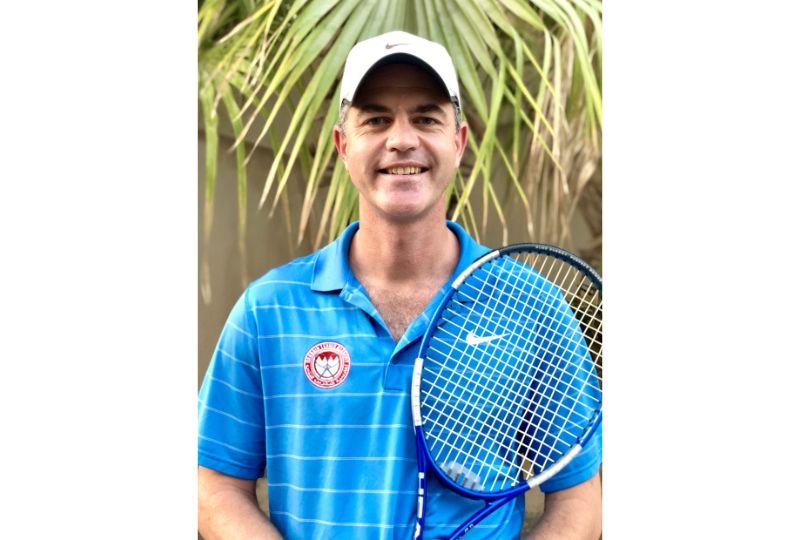
Dan Barrie is the tennis director at Bahrain Tennis Academy and is a Racquet Sports Professionals Association (RSPA) elite professional. Connect with him via Instagram @bahrain_tennis_academy.
&uuid=(email))