

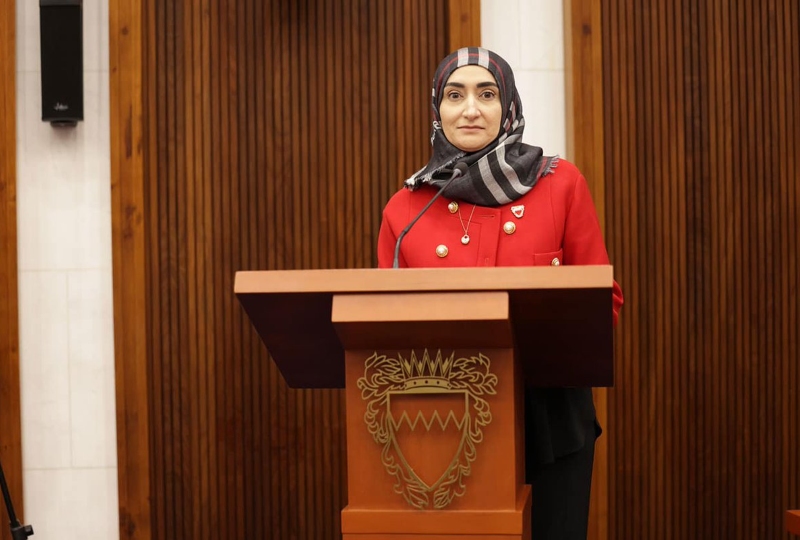
More than 93 per cent of licensed trainers in Bahrain’s private training institutions are Bahrainis, according to official figures placed before the Shura Council.
The services committee has advised Shura Council members to reject a draft law seeking to amend provisions of Decree-Law No (25) of 1998 on Private Educational and Training Institutions, arguing that the objectives of the proposal have already been achieved.
The issue is set to be debated during Sunday’s Shura Council session.
Committee chairwoman Dr Jameela Al Salman said the high Bahrainisation rates – 93.12pc among licensed trainers and 74pc among licensed instructors in 2024 – underscore the effectiveness of existing policies without the need for further legislative amendments.
“These figures clearly indicate that the goal of enhancing employment opportunities for qualified Bahrainis in the private education and training sector is already being realised,” she said. “The data reflects tangible progress through current regulatory and labour market frameworks.”
The draft amendment, originally proposed by MPs, aimed to prioritise the employment of qualified Bahrainis in private educational institutions, particularly in light of rising numbers of graduates seeking teaching jobs in the public sector.
However, Dr Al Salman noted that significant legislative changes had taken place during the committee’s review.
“While the proposal was under renewed study, Law No (4) of 2026 on Private Educational Institutions was issued on January 28,” she said. “This law repealed the provisions relating to private educational institutions contained in the 1998 decree-law, as well as any text that contradicts its provisions.”
She explained that this development rendered the proposed amendments inapplicable to private educational institutions, as the legal basis they sought to amend no longer exists.
“As legislators, we must ensure that amendments are directed at valid and enforceable provisions,” she said. “In this case, the legislative framework governing private educational institutions has already been replaced.”
Education Minister Dr Mohammed Mubarak Juma had also informed the council that existing employment policies already prioritise Bahrainis in both public and private sectors, meaning the intended objective of the draft law is being achieved through administrative and regulatory measures.
According to the Legislative and Legal Opinion Commission, the original intent of the proposal was to create a binding legislative mechanism obliging private institutions to help absorb qualified Bahraini graduates unable to secure public-sector teaching positions.
But, Dr Al Salman said the combination of the new 2026 law and the strong Bahrainisation indicators in the training sector made further amendments unnecessary.
“The committee conducted a comprehensive review of all relevant memoranda, legal opinions and stakeholder views,” she added. “In light of the recent legislative developments and the clear statistical evidence, we concluded that there is no need to proceed with the draft law.”
The services committee has therefore recommended that the Shura Council vote against the proposal.
Read more:
King commends US friendship
Path to Peace
ENT conference to showcase latest advances and research
&uuid=(email))