

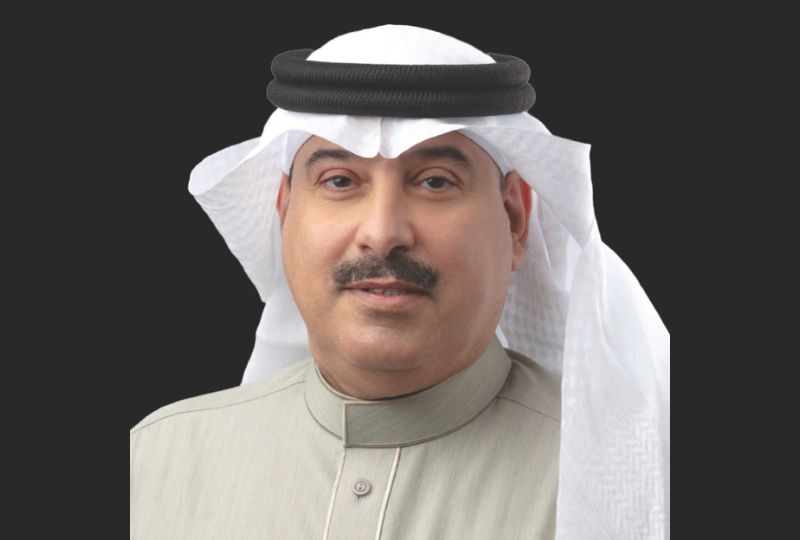
An ambitious multi-layered strategy to curb water losses, tighten monitoring and modernise infrastructure has been unveiled by the Electricity and Water Authority (EWA).
EWA vice-president for water affairs Ibrahim Al Kaabi said the authority was refining its long-term roadmap to ensure ‘realistic, technically grounded and sustainable’ targets.
“We are currently finalising a comprehensive master plan for water requirements, which sets a target loss rate of 23 per cent by 2032,” Mr Al Kaabi told MPs during a high-level briefing to Parliament’s financial and economic affairs committee.
He stressed that loss calculations are based on an approved methodology used in official reporting.
“Our approach is more accurate and objective, avoiding assumptions that may underestimate losses. We are confident that our systems reflect the true operational reality of both the transmission and distribution networks.”
A key focus is the transmission network, where updated records of all flow meters – including installation dates and performance data – have been compiled ahead of a phased replacement programme set to begin this year.
“All transmission meters undergo periodic testing, and results are documented against technical standards,” Mr Al Kaabi said. “Meters that fail verification are reassessed or replaced according to a structured internal mechanism, which is now being reviewed for further strengthening.”
In distribution zones, EWA has upgraded its NetBase platform and is completing integration with the IZARnet system to enable real-time data monitoring. The connection process is already 85 per cent complete and due for full activation by October.
“Losses are monitored monthly across enclosed areas in line with approved procedures,” he said. “Temporary field challenges do not undermine the integrity of overall calculations.”
He added that emergency valve operations for maintenance “do not affect the accuracy of total network loss measurements,” noting that additional co-ordination controls are under study and expected to be formalised later this year.
Mr Al Kaabi highlighted the transition from mechanical to smart meters as a turning point.
“Between 2021 and 2023, a large share of our budget was directed towards smart metering. This significantly improved the accuracy of loss calculations through real-time data,” he said.
In 2024 alone, 50 pipe replacement projects were implemented - exceeding the 47 originally planned - after new technical data prompted the fast-tracking of priority works.
The authority also defended the high number of detected leaks, describing it as evidence of proactive early detection systems.
“Most leaks are identified at an early stage through advanced surveys and addressed immediately. This reduces long-term losses and emergency maintenance costs,” Mr Al Kaabi said.
On illegal water connections, EWA has adopted a reconciliation-focused policy since mid-2022, allowing violators to settle dues and avoid prosecution if they comply with conditions.
“This approach has proven more effective in safeguarding public funds,” Mr Al Kaabi said. “It enables us to recover unpaid consumption charges and associated fees more efficiently, while maintaining fairness.”
Where settlement is not reached, cases are referred to the Public Prosecution.
He added that a neutral external consultancy prepared a reference table for estimating illegal consumption in cases where direct measurement is impossible. “Each case is still assessed individually to ensure accuracy and justice.”
EWA is also rolling out an upgraded collection and billing system by August, aimed at curbing water use through closed accounts.
“Integrated technical and monitoring mechanisms have been embedded into the new system,” Mr Al Kaabi said.
“They will ensure stricter oversight and enable immediate invoicing once activated.”
“Our objective is clear,” he concluded. “We are strengthening governance, modernising infrastructure and ensuring that every drop of water is accounted for with precision and responsibility.”
mohammed@gdnmedia.bh
&uuid=(email))