

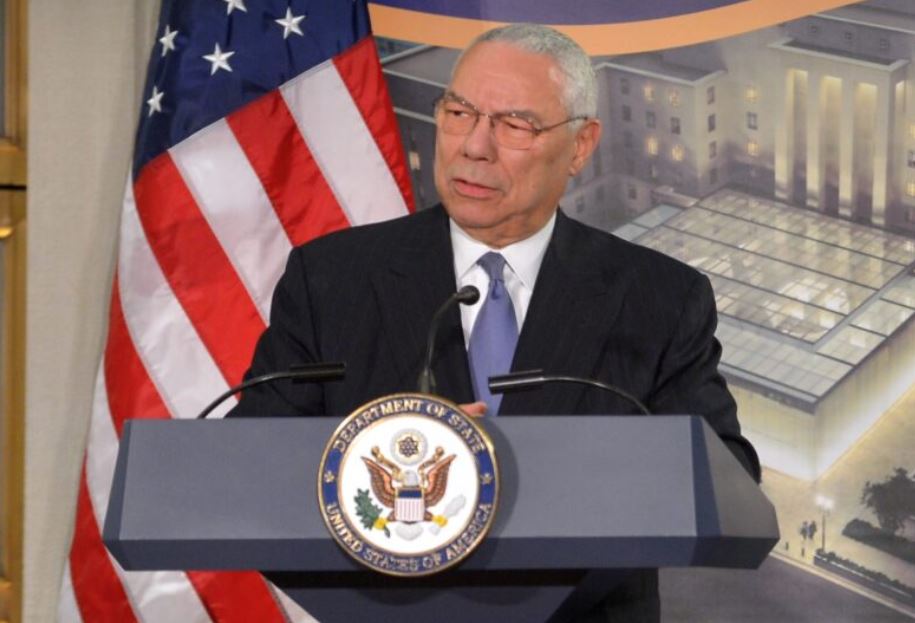
In February 2003, Secretary of State Colin Powell went to the United Nations to present the George W Bush administration’s case against Iraqi leader Saddam Hussein. His remarks were directed at two audiences: reluctant allies and unconvinced Americans.
Hawks who wanted this war termed Powell’s performance ‘compelling and persuasive’. His calm and commanding presence, combined with a multimedia presentation of audiotapes and photographs, built a strong case for US allegations that the Baghdad regime wasn’t fully complying with UN mandates and was seeking to build a nuclear warhead.
Even though the Secretary’s ‘evidence’ was cherry-picked or even fabricated, and artfully presented for maximum impact, his arguments didn’t sway the majority of Americans who remained unconvinced. Most didn’t want a war with Iraq. They weren’t asking for proof of the Iraqi government’s brutality or evil intent. They already knew that to be true. What they wanted to know was ‘why a war and why now?’ In fact, they wanted answers to the very questions Powell had laid out years earlier in what came to be known as ‘The Powell Doctrine’–six requirements before the US should engage in any foreign military conflict:
Were vital US interests at stake?
Was the US willing and able to commit sufficient resources to win swiftly, decisively, and with minimal casualties?
Were the military and political objectives clearly defined and delineated?
Was there the political will to sustain the commitment needed to realise the objectives?
Did a reasonable expectation exist at the outset that the American public in Congress would support this commitment and would sustain that support?
Have all possible means of resolving the conflict been exhausted?
We now know that the Bush administration wasn’t truthful in making its case for war. Saddam Hussein didn’t have and wasn’t building a nuclear warhead, and Iraq wasn’t the sponsor of the 9/11 terrorist attacks on the US.
However, the administration’s more significant lies were those presented to Congress to address the public’s and Congress’ concerns about the war. These included: that the war would only involve a limited number of troops; that US forces would be celebrated in Iraq as liberators; that the war would be over in a few weeks; that the troops could come home after six months; that the war would cost only a few billion dollars (with remaining costs covered by Iraqi oil revenues); that extremism would be defeated; and that Iraq would emerge as a beacon of democracy to light up the whole Middle East.
The war did succeed in removing Saddam Hussein from office, but it was the unintended consequences of that war that remain with us a generation later. Thousands of Americans and hundreds of thousands of Iraqis were killed. The cost to the US treasury was over seven trillion dollars. Tens of thousands of US troops suffered injuries and trauma from their service. Iraq remains unstable. With Saddam’s defeat, Iran was unleashed and emboldened, finding a foothold in Iraq, and the sectarian extremism of Al Qaeda metastasised into ISIS which spread across the Middle East and north and west Africa.
A thoughtful analysis of the regional situation before the war’s start would have helped policymakers understand the inevitability of these unintended consequences. But because Powell, himself, didn’t answer the very questions posed by his own doctrine, we went blindly into Iraq and we, the Iraqi people, and the broader region are still living with the devastating and destabilising results.
This tragic history should be considered when we assess the current US-Israel war on Iran.
Americans won’t argue with the president’s case against Iran’s domestic repression or its export of violence, though Trump has bent the truth about the nuclear issues. But no matter how problematic Americans may view the Iranian regime, a majority are opposed to this war. With the Iraq war a not-too-distant memory, Americans want to know why war is necessary? What will be its cost, terms of engagement, and expectations of success? How will it end?
The result will be a costly war with no good outcome and a region in chaos for years to come.
The tragedy is that this might have been avoided had the Trump administration learned the lessons of the Iraq war debacle and been attentive to the requirements of the Powell Doctrine.
&uuid=(email))