

Bahrain spends BD550.8 million a year to produce, transmit and distribute electricity, it has been revealed.
Of this, BD175.3m is covered through government subsidy, while BD375.5m is recovered through tariffs paid by consumers.
Outstanding electricity and water bills have reached BD84m and 15,554 disconnections for non-payment have been recorded since the start of the current legislative term.
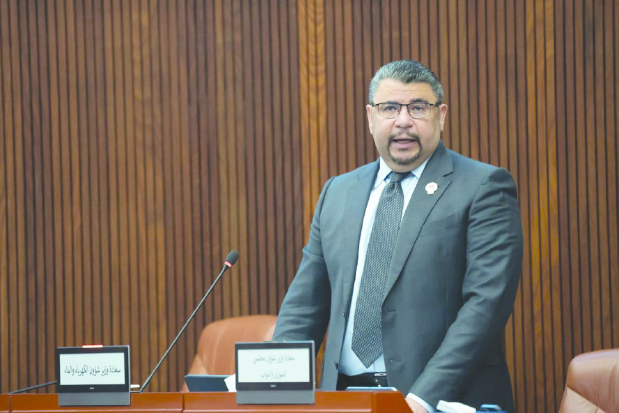
The figures were revealed by Electricity and Water Affairs Minister Yasser Humaidan, who is politically responsible for the Electricity and Water Authority (EWA), while responding to questions from MPs on costs, subsidies, tariffs, renewable energy and governance.
“In 2024, the total cost of electricity production, transmission and distribution reached BD550.8m,” Mr Humaidan said.
Of this, BD416.8m was for production, BD79m for transmission and BD55m for distribution.
He explained that the unit cost per kilowatt-hour is calculated annually by dividing total sector cost by the number of units sold during the same year.
“These figures reflect the true operational burden of maintaining a reliable electricity network across the kingdom,” he said.
For Bahraini households with a single account, subsidy coverage reaches 89pc for the first 3,000 kWh; 68pc for 3,001-5,000 kWh and 45pc beyond 5,000 kWh.
Non-Bahraini residential accounts, multi-account Bahraini homes, and commercial and industrial users receive far less subsidy support and therefore shoulder a much larger share of the actual cost.
Outstanding dues amount to BD84,011,335.70 – of which BD34.6m are from first‑home Bahrainis, BD21.4m from second accounts, BD26.2m from commercial and industrial accounts, and BD1.59m from non‑Bahraini homes.
EWA issues six notices over 53 days before disconnecting the supply. “This gives subscribers ample time to settle their dues before the final step is taken,” Mr Humaidan said.
Since the start of the term, a total of 15,554 disconnections were recorded, including 6,640 first homes, 5,276 second homes, and 3,638 commercial and industrial accounts.
“Instalment plans, flexible settlements and Fixed Discount Initiative allow families to pay a steady amount year-round despite heavy summer consumption,” the minister pointed out.
Operational reforms saved BD30m in 2022, BD70m in 2023 and BD70m in 2024 without altering tariffs, Mr Humaidan added.
The BD1 monthly fixed electricity and water charges, unchanged since 2016, cover smart meter systems and data management.
Meanwhile, water network losses dropped from 25.30pc in 2022 to 23.77pc in 2024 through the successful adoption of leak detection technology, smart meters and network replacement.
mohammed@gdnmedia.bh
&uuid=(email))