

In the ‘stock exchange of wars’, everyone emerges declaring victory, as rhetoric floods the stage to the rhythm of propaganda aimed at domestic consumption.
Yet, the most enduring truth is that wars produce fewer winners than they produce losers – and often, there is one greatest loser.
As the extended truce in the US–Israeli–Iranian confrontation nears its end, it appears that the ‘biggest loser’ is Iran – not only geographically but also deep within its economic, political, and social structures.
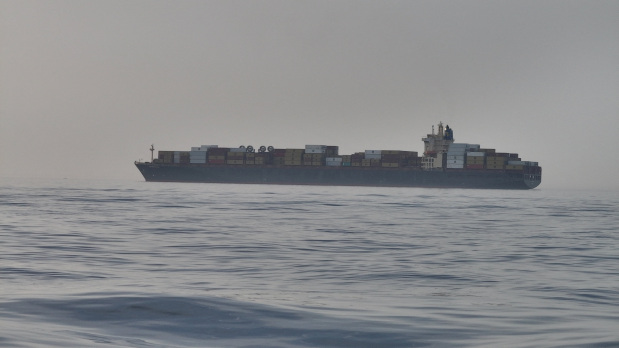
From the outset, the battle was not purely military but fundamentally economic. With the ongoing US blockade of the Strait of Hormuz – the vital artery of global energy flows – Iran faces a harsh equation: ‘oil without buyers, storage tanks full on Kharg Island, and revenues eroding daily’, as Tehran struggles to get its oil exports to market.
US President Donald Trump reinforced this view by stating that Tehran is losing around $500 million a day, a figure that reflects the scale of Iran’s economic haemorrhage more than it does mere political estimation.
This pressure goes beyond numbers; fear seeps into the details of everyday life in Iran. With declining revenues and disrupted exports, the state’s ability to meet its obligations – chief among them, the payment of salaries – comes into question.
Here, politics intersects with security. Delays or disruptions in salaries for sensitive institutions such as the Revolutionary Guard and the army could open the door to internal discontent, and perhaps gradual, silent fractures, especially in an already suffocating economic environment.
And the losses are no longer confined to the domestic front; they are beginning to affect one of Iran’s key instruments of power abroad – its network of proxies. As economic constraints tighten, Tehran’s ability to finance these networks declines, threatening a gradual erosion of its regional influence and depriving it of one of its most important tools in managing the conflict. These networks, which have relied heavily on Iranian financial and military support, may find themselves facing a new reality that forces them to scale back activities or reassess their strategies, opening the door to shifts in the regional balance of power.
Iranian media itself has not concealed these concerns. The newspaper Donya-ye-Eqtesad noted that the country is entering a phase of ‘neither war nor peace’ – the most dangerous phase, where pressure persists without resolution. According to this view, the US-Israeli strike has not only caused material damage but also triggered deep anxiety over inflation. After reaching unprecedented levels of 71.8 per cent last February, inflation is now expected to potentially climb to 132pc in the absence of any agreement or political breakthrough. While inflation partly stems from domestic policies, the war has exacerbated it, pushing it to the brink.
As inflation worsens, the budget deficit widens, leading to spending cuts, tax increases, and possibly resorting to printing money – a classic recipe for currency erosion and rising prices. Within this vicious cycle, the Iranian citizen becomes the weakest link, as purchasing power erodes and social pressures mount, raising the likelihood of protests or unrest.
Yet, the losses are not limited to the domestic sphere. Regionally, Iran will need many years to rebuild its relations with neighbouring Gulf states, particularly after its aggression against the GCC states. Trust – already a scarce currency in international relations – has been deeply shaken, and restoring it will be slow and complex.
In Bahrain, voices have emerged calling for a boycott of Iranian products and the imposition of economic isolation on Tehran, reflecting a rising public mood opposed to any near-term rapprochement.
In the UAE, home to a large Iranian community estimated at around 600,000 people, calls have also surfaced to reconsider this presence and cut economic ties – developments that, if realised, would deprive Iran of one of its most important commercial and financial gateways.
The continuation of the current ‘neither war nor peace’ situation, with sanctions and pressures intact, could lead to a gradual erosion of Iran’s economy, rising inflation, and growing social strain, without a total collapse, but rather through slow and costly attrition.
As crises deepen to the point where the state can no longer pay salaries or control prices, the door may open to widespread protests and perhaps divisions within state institutions, arguably the most dangerous scenario for regime stability.
In conclusion, wars do not end when the guns fall silent, but when people begin to pay the bill. The cost of this conflict will linger for years, and Iran’s domestic front will become the true battlefield in the coming phase. This is because the system governing Iran today shows little regard for its people, conducting its struggle with a mindset that treats the nation – the Iranian people – as fuel, or like a self-destructive actor concerned only with survival: either it remains in power, or it leaves behind a devastated country.
&uuid=(email))