

RECENTLY, I took my nine-year-old with me to the Bahrain Oncology Centre to pick up my medication.
It’s the first time I’ve taken him with me and my decision to do so, on day one of the ceasefire since the start of the regional conflict, was intentional.
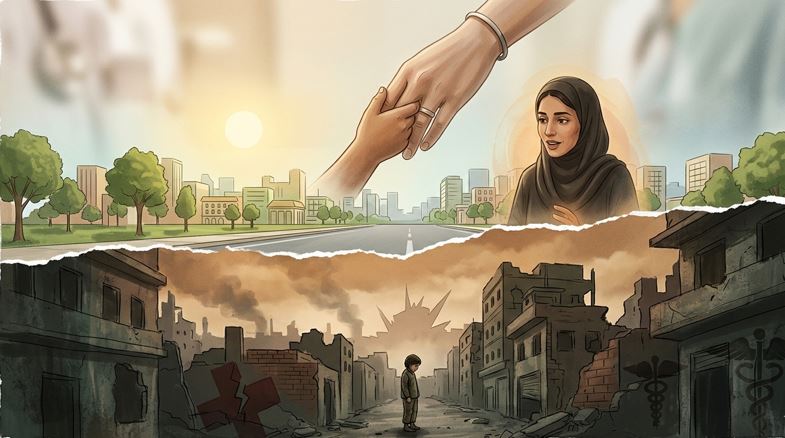
I took him because I wanted him to see firsthand just one example of the privilege afforded within the system we live in. In this case, it’s the privilege that his mother will have free and accessible cancer care for the rest of her life. On the drive there, I explained to him that this is far from a given in other countries, and that in most places even basic treatment depends on insurance, money, or both.
And so in the 15 minutes that it took us to park, walk in, collect the medication, and leave, I showed him how different our normal could look like somewhere else.
I also talked to him about the war that we’ve lived through these past five weeks, and I explained that even our experience of wartime in Bahrain and the broader GCC has come from a place of immense privilege.
There has been a clear sense of safety and security. And on the ground, in the very few cases, thankfully, where damage has taken place or people have been impacted, no one has been left to deal with it alone. Medical care is covered, homes are repaired. The disruption has been managed, in fact largely absorbed. And I do think that is well outside of the norm.
I said all this to my young boy not because I want cancer or war to be a big part of his life. Like any parent, I shield my child as much as possible, for as long as possible. But I need him to understand some of the privileges we live in because I think losing sight of it, wherever and whoever you are, is a dangerous spot to be in.
Privilege isn’t something abstract. It’s practical, and it’s relative. It exists in the gap between what we experience as normal and what others are still striving for. And yet, most of us don’t stop to examine it. Not because we don’t care, but because we’re always looking ahead.
There’s always something missing, something to improve, something to reach for. That might drive progress, but it also narrows our field of view. We compare upwards, measure against more, and in doing so, lose sight of what already exists around us.
But when you see your privilege fully and understand that this is not the default, your view of the world changes, your understanding of other people’s realities changes, and you think much more carefully, not only about what you can expect, but also what you must contribute to keep this going.
Azza Mubarak Matar
&uuid=(email))