

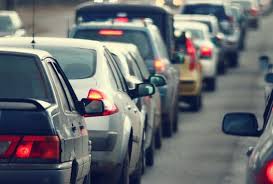
The GDN reported about a new five-year plan launched to restructure the road network to address the ever-increasing traffic congestion.
Yet, there appears to be no comprehensive study by any university student or researcher on the thousands of collective national man-hours lost daily due to traffic delays.
If this writer, now over 80 and suffering from prolonged illness, may be excused for not instantly tracing past records, it is worth recalling a sane voice in the previous Assembly who observed that the government had spent colossal sums on widening roads, redesigning junctions, building underpasses, flyovers and new roads, but with little or no impact on traffic congestion.
How can the nation expect any real relief when, on the very first day of turning 18, young people rush to obtain learner licences and, with their first salary, purchase cars on instalment?
While some MPs suggest restricting expatriates from driving as a partial solution, economic and trade realities pose significant barriers. More meaningful measures – such as regulating the issuance of driving licences and placing modest curbs on car instalment sales – would require bold decisions that, I believe, legislators are reluctant to take.
Despite road widening and the construction of overhead bridges and underpasses, the harsh reality remains. Every day, around 150 new licences are issued and at least 50 new cars are sold. These vehicles may enjoy signal-free travel for part of the day, but by nightfall they all descend into residential streets and narrow by-lanes to park, even as open spaces continue to shrink.
Recently, this newspaper reported that serious action would be taken against illegal road blocking. What is urgently needed, however, is firm and sustained attention to worsening driving habits, especially illegal and inconsiderate parking.
Up until the late 1980s, most Manama residents drove to work early in the morning, leaving parking spaces free. By 7am, these spaces were occupied by shopkeepers, businessmen and employees from other districts, and after they left in the evening, residents and customers parked their cars. This informal balance has since collapsed.
Today, due to a lack of enforcement and fear of the law, many residents and shopkeepers unofficially ‘reserve’ parking spaces using AC gaskets, wooden stools, water bottles, paint tins or planks. This leaves no space for temporary visitors.
Anyone wishing to observe traffic indiscipline firsthand need only stand at the bus stop kerb outside the American Mission Hospital in Manama. During the day, the kerb is often occupied by parked cars, forcing buses to stop on the road and block moving traffic. At night, it becomes an unofficial parking area for residents, again with no fear of checks.
The real need, therefore, is not merely for wider roads, but for bold decisions. They are essential if the broader welfare of the nation is to be served.
Muhammad
&uuid=(email))