

Pavements could be lowered and streets redesigned to create additional parking spaces and dedicated garbage bin bays across Bahrain under future road maintenance programmes, the Works Ministry has indicated.
It follows a recommendation by the Muharraq Municipal Council for Road 28 in Arad (Block 241), where councillors suggested lowering sections of pavement to allow vehicles to park safely off the carriageway and creating built-in recesses for waste containers currently occupying parts of the road.
Responding to the proposal, Works Ministry Under-Secretary Shaikh Mishal bin Mohammed Al Khalifa said the concept had been assessed from both traffic and planning perspectives, but could not be prioritised at this stage.

Shaikh Mishal
“There is no objection, in principle, to providing public parking spaces along Road 28 and constructing dedicated bays for garbage containers to serve residents of the area,” he said.
“However, it is currently not possible to include the required works within the ministry’s priority list, in line with the approved road maintenance project programmes,” he added.
The Under-Secretary indicated that the concept had merit and could be replicated elsewhere.
“The possibility of implementing this request will be considered under the ministry’s future projects, with the number of parking spaces to be determined after approvals from the General Directorate of Traffic and relevant service authorities, and subject to available funding,” he said.
The proposal has sparked wider discussion within municipal circles about whether Bahrain’s older residential areas – where pavements are often high and narrow and waste bins spill onto the roadway – could benefit from a modern redesign that better balances pedestrian space, parking needs and waste management.
Arad councillor Ahmed Al Meghawi, who has been advocating for the plan, said the situation in many neighbourhoods was no longer practical.
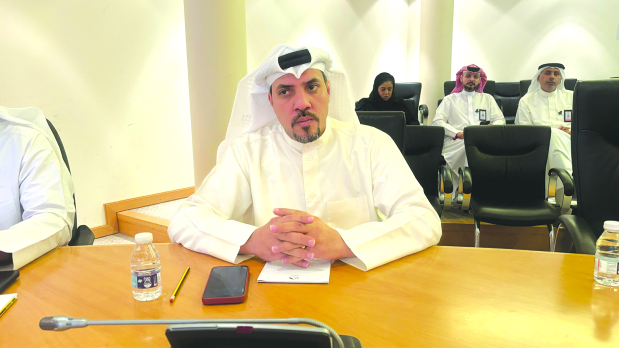
Mr Al Meghawi
“In many streets, garbage containers take up part of the road, forcing drivers to swerve, while residents struggle to find legal parking spaces near their homes,” he said.
“By slightly lowering sections of the pavement in a studied and organised manner, we can create proper parking without harming pedestrian movement, and at the same time allocate recessed spaces for bins so they are no longer left randomly on the street.”
He added that the idea was not about removing pavements, but redesigning them intelligently.
“This is about better use of space. Instead of having high pavements that are rarely used along entire stretches, we can reconfigure parts of them to serve multiple needs – pedestrians, vehicles and sanitation – in a safer and more organised way.”
Council chairman Abdulaziz Al Naar believes that, if adopted under future road maintenance schemes, the approach could be rolled out gradually across Bahrain, particularly in older residential areas built before current vehicle densities.
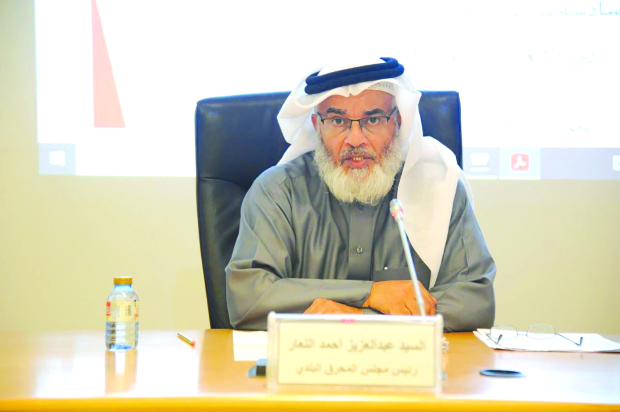
Mr Al Naar
He added that the concept aligns with modern ‘complete street’ principles, where roads are redesigned to serve multiple functions more efficiently rather than adhering to outdated layouts.
“For residents of Arad, the proposal may take time to materialise, but it has already opened the door to a broader rethink of how Bahrain’s neighbourhood streets are designed – turning a local parking complaint into a potentially nationwide urban improvement plan,” said Mr Al Naar.
mohammed@gdnmedia.bh
&uuid=(email))