

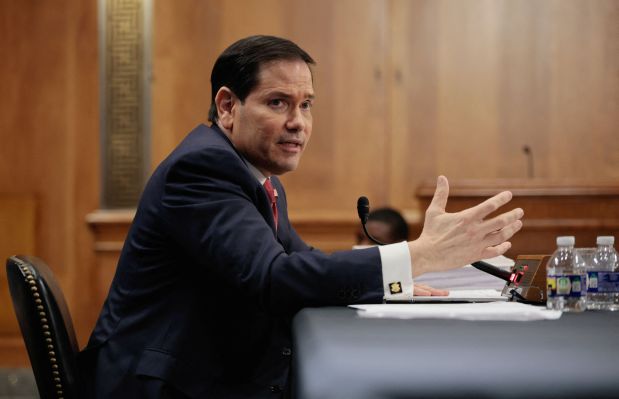
US Secretary of State Marco Rubio yesterday said Iran must commit to negotiating ‘severe and long-term’ limitations on its nuclear programme as part of a peace deal.
Speaking to the Senate Committee on Foreign Relations, Rubio also said technical talks could take months to finalise.
Under an initial understanding the US is pursuing with Iran, Tehran would agree to reopen the Strait of Hormuz. Once that happens, a second phase of talks for a durable peace deal would start.
“Phase two is they (Iran) have to commit to very specific negotiations on (the) disposition of the highly enriched uranium that is still buried deep in a mountain somewhere,” Rubio said.
“They have to agree on negotiating severe and long-term limitations and, or, cancellation of enrichment in activity in the second phase of negotiations.”
He said such highly technical matters could not be worked out in a few days. “That would require a team of experts to meet over a 30, 60, 90-day period and work out the details, but they have to commit to their willingness to do that,” he said.
Rubio said US President Donald Trump’s negotiating team has not offered Iran any sanctions relief in exchange for reopening the Strait of Hormuz.
His testimony marked the first time since January, the month before Trump and Israel launched the war on Iran, that Rubio had testified in front of politicians.
He said Iran’s supreme leader Ayatollah Mojtaba Khamenei is now taking a more active role in his country’s affairs after he was severely wounded in an Israeli strike on February 28, the opening day of the Iran war.
“We haven’t seen him publicly,” Rubio said, noting that was understandable given the number of Iranian leaders killed by Israeli and US strikes. “Being very public is probably not something that’s recommended for them”.
&uuid=(email))