

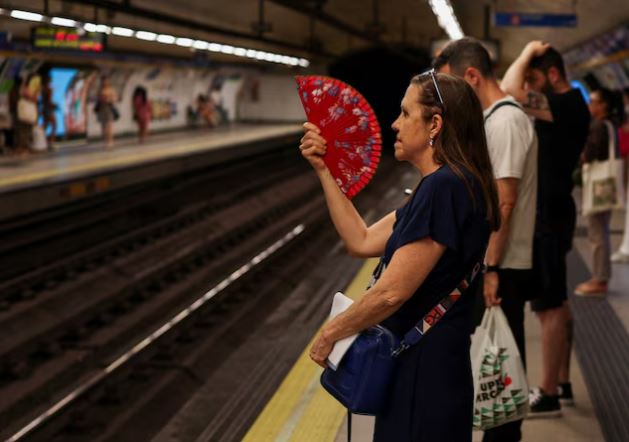
As a heatwave pushes temperatures above 40C across Europe, companies are trying to protect workers, to keep operations running and capitalise on soaring demand for anything that might offer relief.
In Germany, logistics giant DHL has equipped delivery staff with “cool boxes” containing reusable cooling towels, water-activated wrist coolers and UV-protective neck guards as its over 111,000 postal workers continue their rounds in the heat.
Construction firms are shifting working hours to start earlier and finish before the hottest part of the day, while retailers are struggling to keep pace with demand for fans and portable air-conditioning units.
“The extremely high temperatures naturally pose a special strain during physically demanding work,” DHL said, adding that workers are being urged to drink plenty of fluids, use sunscreen and seek shade whenever possible.
Thyssenkrupp Steel Europe, the continent’s second-largest steelmaker, is offering extra water and fruit at its blast furnaces, steelworks and hot strip mills.
For many workers, coping strategies are becoming a routine part of the job.
Germany’s Central Association of the Construction Industry said road-building crews and outdoor workers were most exposed to the risks associated with extreme heat.
“People often start earlier and finish correspondingly earlier to avoid the hottest part of the day,” said Heribert Jöris, the association’s head of social and collective bargaining policy.
As working hours are adapted, France’s association of farm cooperatives said some silos were organising night shifts to receive grain because local authorities have banned afternoon harvesting to limit the risk of fire.
E.ON, Europe’s largest energy networks operator, has set up pavilions at its Bayernwerk subsidiary so staff can rest in the shade.
It said high temperatures also test power grid management, though, in some cases, increased electricity use for air conditioning could be offset by more solar power generation.
&uuid=(email))