

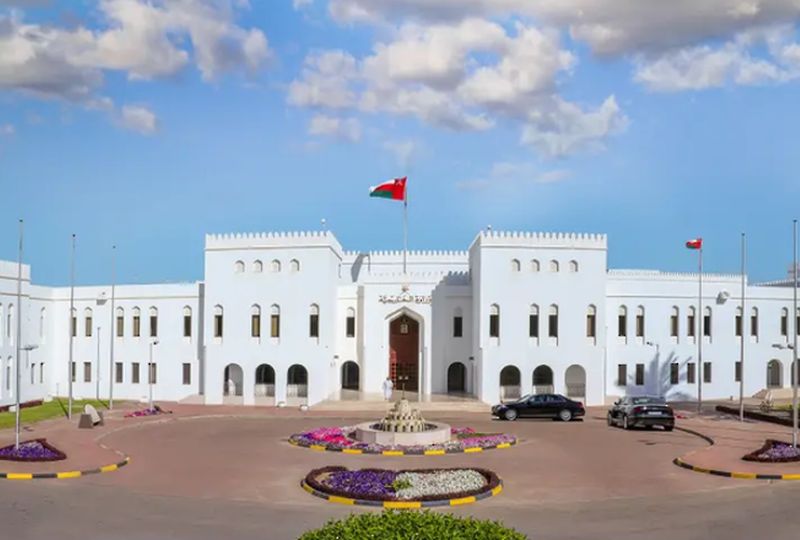
The Ministry of Finance announced today the final account of the actual performance results of the State's General Budget for the fiscal year 2025. The results closely aligned with the approved estimates at the beginning of the same year; public revenues were estimated at approximately RO 11.180 billion, and public spending was estimated at about RO 11.800 billion, resulting in an estimated projected deficit of around RO 620 million.
The actual financial performance of the State's General Budget for 2025 indicated an 8 per cent increase in public revenues compared to the approved budget estimates, reaching RO 12.122 billion. This increase is attributed to the rise in oil and gas revenues.
Conversely, the actual public spending volume by the end of 2025 witnessed a 7 per cent increase, recording approximately RO 12.583 billion. This was driven by increased social spending and support aimed at stimulating economic activity, which included an increase in subsidies for petroleum products, support for the electricity sector, and a rise in development spending to accelerate the pace of work on ongoing developmental projects.
As a result, the realised deficit decreased by 26 per cent compared to the approved budget, amounting to approximately RO 461 million.
Regarding oil revenues, the State's General Budget at the end of 2025 recorded an 11 per cent increase in total oil revenues (oil and gas) compared to the approved budget, amounting to approximately RO 8.481 billion. Net oil revenues during 2025 reached about RO 6.640 billion, rising by 14 per cent from the net oil revenues estimated in the 2025 budget of roughly RO 5.830 billion. This is attributed to the increase in average oil prices in global markets, as the average realised oil price reached approximately USD 72 per barrel, compared to the approved price of USD 60 per barrel in the 2025 budget.
The average production of oil and oil condensates reached about 999,000 barrels per day, compared to the budget estimate of approximately 1,001,000 barrels per day. This confirms the government's commitment to the voluntary reduction mandated by the OPEC Plus organisation.
Net gas revenues amounted to about RO 1.841 billion, recording a 4 per cent increase compared to the approved budget estimates of approximately RO 1.777 billion. This is attributed to the rise in the average selling price of liquefied natural gas (LNG) from USD 5.41 to about USD 7.49.
Total non-oil revenues by the end of 2025 reached approximately RO 3.641 billion, an increase of RO 68 million compared to the approved budget. This encompasses about RO 3.602 billion in current revenues and approximately RO 39 million in capital revenues and recoveries.
On the spending side, current expenditures increased by 2 per cent by the end of 2025, recording about RO 8.726 billion compared to the approved 2025 budget of roughly RO 8.555 billion. Defence and security expenditures accounted for about RO 3.066 billion, civil ministries' expenditures stood at roughly RO 4.780 billion, and public debt service amounted to about RO 880 million.
Total development expenditures for ministries and civil government units, along with expenditures for projects with a developmental impact, surged by 38 per cent, registering about RO 1.577 billion compared to the approved 2025 budget. This is attributed to the increased financial liquidity allocated to the development budgets of government units and governorates for 2025 in order to accelerate the implementation of development projects approved in the Tenth Five-Year Development Plan (2021-2025).
Spending on the infrastructure sector accounted for about 43 per cent of the total actual development spending for 2025. This was followed by spending on the social infrastructure sector at 40 per cent, the service production sector at 12 per cent, and the commodity production sector at 5 per cent of the total actual development spending for the year.
Total contributions and other expenses reached approximately RO 2.280 billion, rising by 8 per cent compared to the approved budget of about RO 2.105 billion. This increase is due to higher expenses in certain areas, most notably subsidies for petroleum products, which amounted to RO 124 million compared to the approved budget of about RO 35 million. Furthermore, electricity sector subsidies reached approximately RO 606 million, representing an increase of RO 86 million compared to the approved figures. This comes in implementation of the Royal Orders to fix fuel selling prices.
The State's General Budget by the end of 2025 officially recorded a financial deficit of about RO 461 million, compared to the estimated budget deficit of roughly RO 620 million, as a result of the increase in oil revenues.
Total public debt by the end of 2025 stood at roughly RO 14.6 billion, a decrease of about RO 15 million compared to 2024, while simultaneously meeting all financing needs and executing liability management operations without any increase in total debt.
Zaher Marhoon Al Abri, Director General of the Directorate General of Treasury and Accounts at the Ministry of Finance, pointed out that the actual performance of the State's General Budget was closely aligned with the approved budget. This alignment reflects the accuracy of financial planning and the realism of the assumptions upon which the approved budget estimates were based, in addition to the governmental efforts exerted to enhance spending efficiency and manage public finances competently.
In a statement to Oman News Agency (ONA), he affirmed that the Ministry of Finance continues to evaluate financial performance and is working in coordination with various government entities to enhance the efficiency of government spending and diversify sources of public revenues in order to achieve the targets of Oman Vision 2040.
&uuid=(email))