

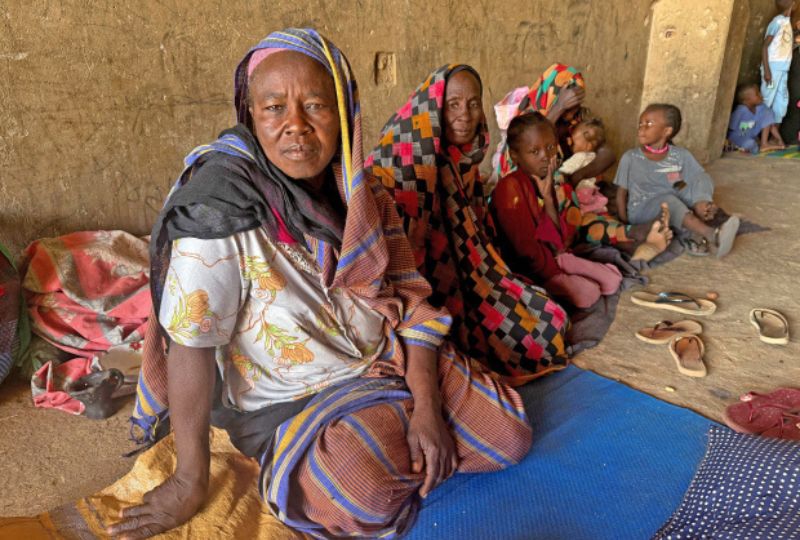
Another human rights catastrophe is unfolding in Sudan around the besieged city of Al Obeid, the United Nations human rights chief said yesterday, warning of a pattern of atrocities and urging the world to act.
Al Obeid is the capital of North Kordofan state, a focus of recent fighting in a war between Sudan’s army and the paramilitary Rapid Support Forces (RSF) that began more than three years ago and has caused a vast humanitarian crisis.
UN High Commissioner for Human Rights Volker Turk said civilians had been subjected to siege-like conditions for 18 months, with critical shortages of clean water in Al Obeid and relentless drone strikes.
During a debate at the UN Human Rights Council in Geneva, Turk told delegates his office had documented patterns of summary executions, abductions, torture and sexual violence along the routes taken by displaced people across the Kordofan region.
He urged the international community not to allow a repeat of the widespread atrocities that took place in Al Fashir in North Darfur last year.
“The signs from Al Obeid are clear and unmistakable: Another human rights catastrophe is unfolding in Sudan, this time in the capital of the strategic state of North Kordofan,” Turk said.
The session was called by Britain, whose envoy previously warned of large-scale atrocities as the RSF massed forces around Al Obeid, one of Sudan’s largest cities, and a place where people displaced from other conflict areas have sought shelter.
The world could not allow Al Obeid to be “the next senseless tragedy”, Britain’s Foreign Secretary Yvette Cooper said in a statement published alongside the council session.
“The international community must rise to the moment,” she said.
The UN International Organisation for Migration (IOM) said yesterday that a full-scale attack on Al Obeid could again uproot hundreds of thousands of civilians, at a time when humanitarian operations were stretched to their limits.
Since February, the number of newly displaced across the wider Kordofan region has risen by nearly two-thirds to more than 219,000 people, according to IOM figures.
Al Obeid hosts around half a million people, including more than 83,000 internally displaced people.
The RSF says its operations around Al Obeid are military in nature.
It has previously said that it does not intentionally target civilians and that those responsible for abuses will be held to account.
The force did not immediately respond to a request for comment.
As in other conflicts, the war in Sudan has become increasingly dominated by drone strikes, which often cause civilian casualties.
At least 45 civilians were killed and 41 injured in 15 drone strikes in Al Obeid and surrounding areas between June 6 and 28, according to the UN human rights office.
Human rights groups have documented alleged war crimes by both sides in the war, and the RSF has been accused of repeated atrocities and ethnic violence.
&uuid=(email))