

GLOBAL stocks were set for their biggest weekly fall since mid-July yesterday, as strain in global bond markets showed little sign of abating, while diplomatic deadlock in the Gulf lifted oil prices to one-month highs and kept inflation risks to the fore.
US government bond yields resumed their climb after Wednesday’s surprise intervention by the Treasury brought barely a day of relief from selling sparked by concerns about elevated inflation and fiscal pressures.
The rise came even as US Treasury Secretary Scott Bessent said he could further increase the government’s repurchases of Treasuries, and floated the idea of fiscal consolidation.
Analysts were sceptical he could find enough spending cuts to seriously curb a budget deficit of more than 6 per cent of gross domestic product, with interest charges alone this year running at $1.2 trillion, while the US debt pile just crossed $40trn.
All this left the dollar heading back towards three-month lows hit on Thursday, with the greenback down almost 1pc this week against other major currencies.
“The initial (Treasury buyback) move was quite remarkable because it came totally as a surprise, but the big question is, ‘is this meaningful enough to have a long-lasting impact?’” said Christian Hantel, a portfolio manager at Vontobel.
“We could see the market still trying to test if they’re ready to increase from the $4 billion they have announced before. So, it could be an interesting couple of days.”
The US 30-year bond yield was trading at around 5.25pc , while the 10-year yield was a touch higher on the day at 4.70pc. Markets assume 5.30pc on 30-year bond yields is now a pain threshold for Treasury, much like the 160 yen level has become for Japanese policymakers.
Higher yields lift debt costs globally, just as tech giants are borrowing heavily to fund AI capex, while raising the discount on corporate earnings and challenging stock valuations.
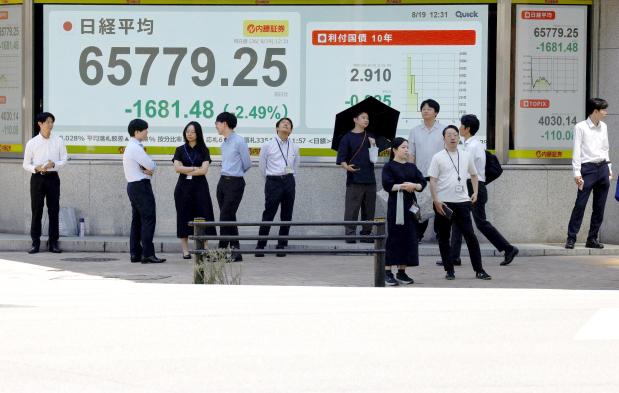
The strain was evident in the Nikkei, which slipped 0.3pc, bringing losses for the week so far to almost 4pc, on track for the biggest weekly drop since mid-July. South Korea and Taiwan both edged higher, but again were down on the week.
In Europe, stock markets eked out early gains. Still, the STOXX 600 index was set for its biggest weekly fall since early July, down around 1pc. MSCI’s world stock index was poised for its biggest weekly drop since mid-July .
On Wall Street, a bumper earnings season has provided some support with S&P 500 futures up 0.53pc, while Nasdaq futures gained 0.8pc.
The AI trade faces a test next week when Nvidia reports, with much riding on its outlook for infrastructure demand and data centre revenue.
Walmart on Thursday showed what happens when high expectations are disappointed, sliding 9pc on a sales miss.
Bessent also made news by expanding on President Donald Trump’s pledge of economic warfare against Iran, saying the U.S. would impose “the toughest sanctions in history” on the country.
The threats further dimmed hopes for a deal that would fully open the vital Strait of Hormuz and pushed Brent crude to a one-month peak near $95 a barrel, before profit-taking set in.
Brent futures were last up around 0.5pc at $94 a barrel, up more than 5pc for the week, while US crude rose 0.4pc to $87.
In currency markets, the dollar was nursing broad losses for the week amid worries ever-growing US debt and policy uncertainties will erode the purchasing power of the currency, driving investors to scarce assets including gold.
The yellow metal was 1.45pc higher at around $4,583 an ounce and touched its highest level in almost three months.
Concerns over the growing US debt pile also drove some investors towards alternatives such as bitcoin, which has typically benefited from efforts to diversify away from US assets.
Bitcoin scaled a more than two-month high yesterday and was last up almost 6pc at $76,446, on track for a 20pc weekly rise, which would mark its largest gain in 2-1/2 years.
“The dollar has come under renewed pressure, in part due to a resurgent ‘debasement’ narrative,” said Jonas Goltermann, chief markets economist at Capital Economics.
“While we continue to think such concerns are somewhat overblown, and that the economic backdrop overall will point to a stronger dollar over the coming months, continued surprises from US policymakers may well matter more in the near term.” The dollar was last down around 0.2pc at 158.79 yen.
Data showed Japan’s core consumer inflation accelerated in July as firms passed on rising import costs, while a survey of manufacturing showed a surge in new orders.
Both added to the case for a September rate hike from the Bank of Japan. Markets, however, are already priced for a quarter-point rise to 1.25pc and would really like a commitment to faster and more aggressive tightening from policymakers.
&uuid=(email))