

Ukrainian President Volodymyr Zelenskiy said yesterday that peace negotiators from Ukraine, Russia and the US had agreed to meet at a technical level in the first half of November in Abu Dhabi, adding that he hoped a meeting of the countries’ leaders would follow.
Zelenskiy said he spoke with US envoys Jared Kushner and Steve Witkoff yesterday after their meeting with Russian President Vladimir Putin earlier this week. He said any peace agreement would need strong security guarantees for Ukraine and funding for 10 years to maintain the Ukrainian army.
“The plan is to meet in the first half of November, and as early as possible, of course,” Zelenskiy told the Hudson Institute think-tank via a video link. He said much would depend on Russia, noting that a similar meeting expected this month had not materialised.
Zelenskiy stressed the importance of continued diplomatic efforts to reach a ceasefire and end the war, now in its fifth year, adding that Europe should also be involved in the talks.
The Ukrainian president said it was critical for the technical discussions to be followed by a meeting of the countries’ leaders.
He said he hoped to have another meeting with the US negotiators, adding that Ukraine was ready to start negotiating on a full ceasefire, or even an agreement covering just the energy sector, or maritime operations, if Moscow was unwilling to discuss a broader deal.
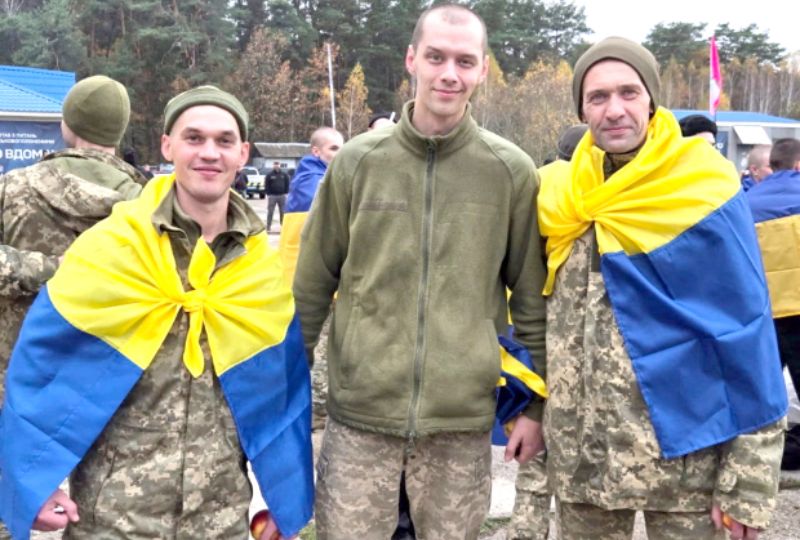
He also welcomed the return of 270 soldiers who had been captive in Russia, but said further exchanges were needed, with some Ukrainian troops held in Russia for over 12 years since Russia’s annexation of the Crimea region.
“If they want to raise any topic, we are ready, but territories is a sensitive issue which can be (addressed) during discussions on the level of leaders,” he said.
The White House had no immediate comment on the plans for a trilateral meeting at the technical level.
Ukraine’s military was still grappling with access to Starlink communications systems, which Ukraine uses for battlefield communications and drone operations, Zelenskiy said, despite US assurances that speed restrictions had been removed.
“The speed limits on Starlink and Starshield are still there, and the speed has not been restored,” he said, contradicting a statement by US President Donald Trump that the services had been fully restored.
Zelenskiy said US Secretary of State Marco Rubio had assured him in a phone call that the satellite communications services would be restored within 48 to 72 hours, but that had not occurred, degrading Kyiv’s ability to defend against Russian attacks.
“On the civilian sector and also closer to the frontline, we still have the same limit, 161 kilometres per hour maximum, so it means 100 miles,” he said.
The limits make it impossible for Ukraine to counter Russia’s jet-powered drones, which travel at speeds of around 280 miles per hour, officials have said.
Ukraine was also waiting for a shipment of air defence interceptors that had been previously agreed, Zelenskiy said, complicating Ukrainian defensive efforts in the face of nearly daily massive attacks by Russian drones and missiles.
He expressed frustration about Western moves to relax some sanctions against Russia that he said were enabling Moscow to continue its war against Ukraine.
Romanian President Nicusor Dan accused Russia of escalating its attacks on Nato’s eastern flank, after a drone strike sank a cargo ship off the Romanian Black Sea coast, killing at least one sailor with three still missing.
Video released by Romanian authorities showed only a small part of the hull of the capsized tanker still visible above the waves as it sank.
Emergency vessels were searching the surrounding waters for survivors in choppy seas and high wind.
Romania’s naval authority said the Comoros-flagged Khoryv, with a crew of 13 Ukrainian and Azeri sailors, had sent a distress signal 13 nautical miles off Romania’s port of Constanta, just beyond Romanian territorial waters.
Nine sailors were rescued from the water, three were missing and one body was recovered.
The past two weeks have seen a sudden surge in deadly attacks on commercial ships off the coasts of Nato members Romania and Bulgaria.
