

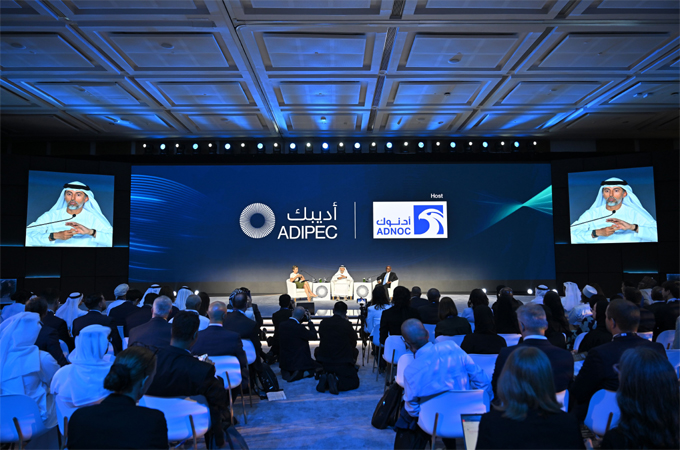
UAE Minister of Energy and Infrastructure Suhail Al Mazrouei has reaffirmed the country's commitment to strengthening energy security through diversification, strategic investment and resilient infrastructure, highlighting plans to invest AED150–200 billion ($41-$54 billion) by 2030 to meet rising demand and support economic growth.
Speaking during a
high-level ministerial panel at ADIPEC 2026, held under the theme “Energy
Security Is National Security: Building Resilient Supply in an Uncertain
World,” Al Mazrouei stressed that energy security remains a fundamental
national and economic priority amid geopolitical uncertainty, rising global
demand and increasing energy requirements from advanced industries, artificial
intelligence and data centres.
Al Mazrouei said:
“Energy security is not simply about securing sufficient supplies. It is about
building an integrated, resilient, and competitive energy system that can
support economic growth, protect essential services, and respond effectively to
future challenges. Our priority is to make energy a lasting competitive
advantage for the UAE by aligning investment with industrial development,
technological advancement, and long-term sustainability.”
He highlighted the
importance of maintaining a diversified energy mix, with renewable energy,
nuclear power and natural gas playing complementary roles in ensuring reliable
and affordable supplies.
Clean energy accounted
for 32.4 per cent of the UAE's electricity generation in 2025, marking progress
towards the country's target of 35 per cent by 2031.
The planned investment
of AED150–200 billion by 2030 will support the expansion and modernisation of
the country's energy infrastructure, including electricity generation capacity,
power networks, storage facilities and integrated system operations.
Addressing
infrastructure resilience, the Minister emphasised the need to incorporate
physical security, cybersecurity, climate resilience and business continuity
into energy planning. He also highlighted the importance of coordination
between government entities and energy operators to strengthen emergency
preparedness, protect critical assets and ensure uninterrupted essential
services.
Al Mazrouei further
stressed the need to develop local manufacturing capabilities, secure access to
critical equipment and invest in specialised national talent to strengthen
supply chain resilience.
He noted that greater
flexibility across energy supply and demand will be increasingly important in
managing rising consumption, improving efficiency and reducing exposure to
supply disruptions and price volatility. Integrating power generation, storage,
electricity networks and consumption patterns will be central to achieving
these objectives.
The Minister also
highlighted the role of strategic partnerships between governments, energy
producers, technology developers, investors and industrial consumers in
accelerating innovation and attracting investment. He emphasised that clear
national priorities, predictable regulatory frameworks and stronger
public-private sector cooperation are essential to bringing advanced
technologies and infrastructure solutions to market.
Concluding his participation, Al Mazrouei reaffirmed the UAE's commitment to developing an energy system that balances security, affordability, sustainability and economic competitiveness, supporting the objectives of the UAE Energy Strategy 2050 and the country's Net Zero 2050 ambitions. -OGN/TradeArabia News Service
