

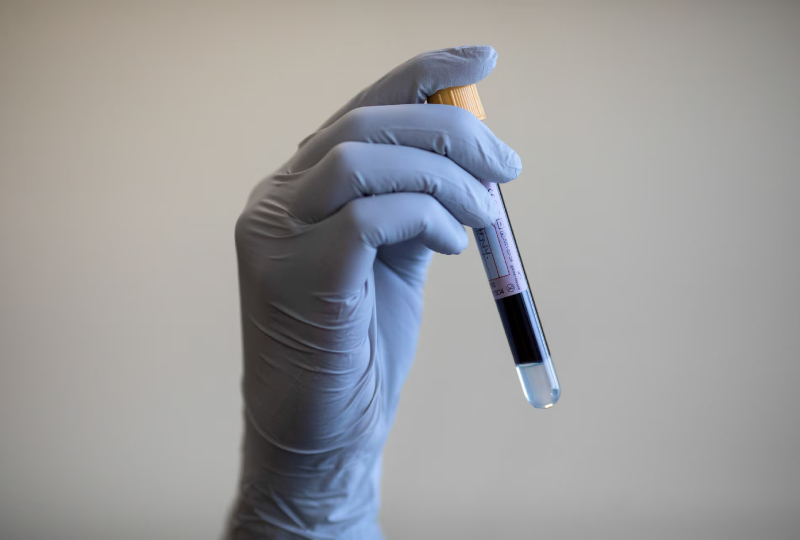
A clinical trial in England will assess whether family doctors' use of simple blood tests that detect multiple common cancers actually result in earlier diagnosis and improved chances of survival.
Several such tests, developed by the University of Birmingham and its partners, will be trialed for their ability to detect signs of several cancers in a blood sample and suggest where in the body they come from.
The trial is a world-first to establish whether simple blood tests can help general practitioners (GPs) identify patients who need urgent treatment much sooner.
Cancer mortality in Britain is among the highest across OECD countries on a per capita basis.
The trial will cover 14 cancers including prostate, ovarian, bowel, pancreatic, stomach and liver, which are often diagnosed too late.
At least 200 GP practices across England's National Health Service will participate in the trial, covering more than 20,000 patients.
Patients aged 45 and over who visit their GP with abdominal symptoms like persistent bloating or discomfort will be able to participate.
The tests will use technologies including artificial intelligence and measurement of proteins in the blood.
The trial will assess how well the tests work to support GPs' judgement before a decision is made to roll them out nationally.
