

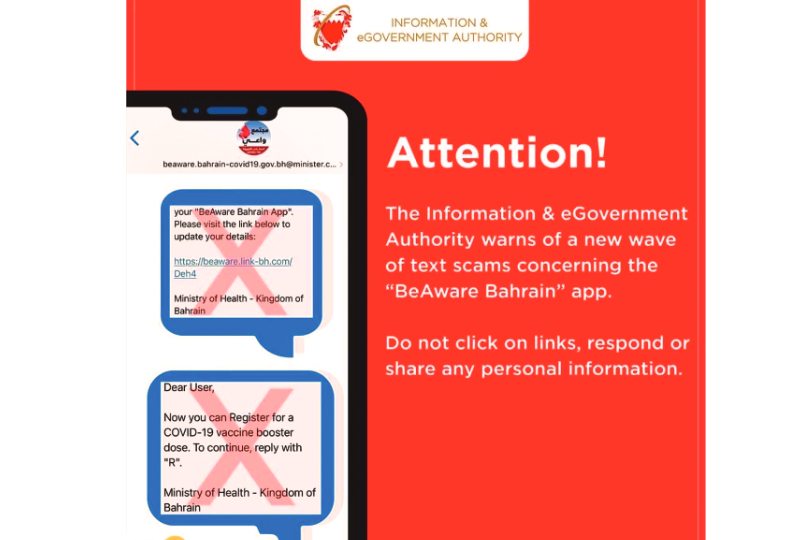
PEOPLE have been warned against responding to suspicious messages on their mobile phones or computers which could turn the gadgets into a ‘playground’ for hackers.
Experts have issued the alert after the Information and eGovernment Authority (iGA) last week revealed that cyber criminals were sending bogus messages about Covid-19 booster shots to people in an attempt to steal personal and financial information.
The GDN earlier reported that one such message urges users to register for the jab and “reply with an ‘R’, while another referred to the Covid-19 application BeAware, and offers people a bogus link ‘to update their personal information’.
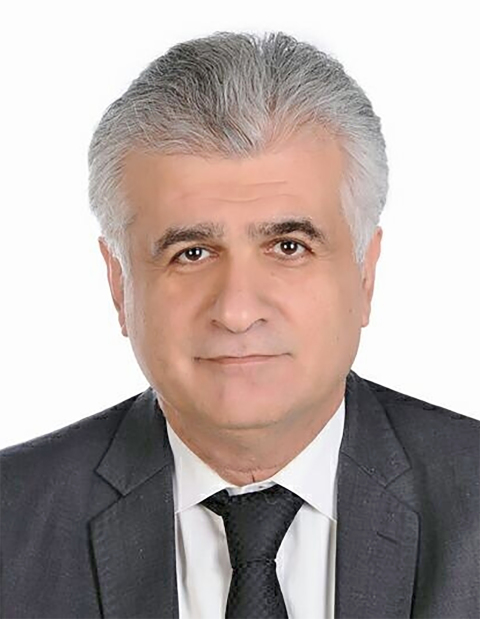
Dr Jassim Haji
Bahrain-based AI expert and president of the Artificial Intelligence Society Dr Jassim Haji urged citizens and residents to be wary of any dubious links or messages on their mobile phones as uncertainty around the pandemic has created more opportunities for hackers and other thieves.
“Remember, from the moment you click that link your phone is a playground for hackers and it is one of the devices on their network,” said Mr Haji.
“They will have access to all data and communications and possibly, depending on the sophistication of the spyware, they will also trade with other networks that you are on.
“This means it is just not your system that is compromised, but also of others who are with you on the phone network like family, friends and colleagues – and the shared devices on WiFi or hotspot.”
The veteran, however, assured that the BeAware application was ‘safe’ as spammers’ target is the common public and not the government system.
“Scams of the common kind, like ones exploiting the name Benefit Pay, is being reported widely and people are aware.
“So, they are choosing newer platforms and the easiest these days is Covid-19 – like the offer for a booster dose. It will get people to respond quickly.
“Unfortunately such activities – spyware and other intrusions – have increased during the pandemic.
“Covid-19 medicines, vaccines and boosters have been the choice of hackers of late.”
Dr Haji said an authentic website will reconfirm the identity of the user ensuring multiple-level security, whilst such bogus links offer a direct entry.
“It is like giving your mobile phone to another person with the freedom to access whatever they wish to – yes, you may have password protection on many levels, but then for a spammer, this is not a big deal.”
The GDN reported on Tuesday that malware attacks in Bahrain continued to surge this year, with more than five million cases recorded in the first six months.
Research by Russian cybersecurity and anti-virus provider Kaspersky found that at 45 per cent, the kingdom saw the third-highest growth in the region in terms of malicious software infections.
Internet giant Google last year said its systems had detected 18m malware and phishing messages through Gmail a day directly related to Covid-19.

Mr Mahmoud
Bahraini Innovation Acceleration expert Nabeel Mahmoud also called on the public not to accept any suspicious invitations or respond to links even by mistake as the hacker gains access to the victims’ files, photo albums as well as their contact details.
“They can then misuse the same to blackmail the victims,” he said.
He also reassured the safety of the BeAware application, adding that cyber criminals use any tool “to attract the attention of their victims”.
“That is why they send other fake messages like calling for CPR renewals, updating personal bank accounts details etc.
“Nowadays, spammers manage to use AI systems to send scam emails and messages.
“The problem is that the victims can’t differentiate between human messages and AI messages,” he added, noting awareness was the solution.
raji@gdn.com.bh
&uuid=(email))