

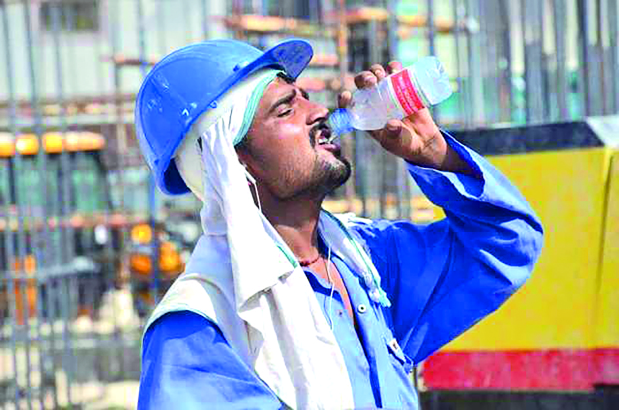
Phew! What a scorcher – and it’s forecast to get hotter. The heat is certainly on as temperatures are set to reach up to 44C over the next few days, with the hotter spell likely to persist throughout Eid Al Adha.
According to the Transportation and Telecommunications Ministry’s Meteorological Directorate, high temperatures will start today and last at least until Sunday.
Today, temperatures will reach up to 41C in the afternoon, before cooling down at night to 26C, accompanied by northerly winds of about 17 knots.
Temperatures will slightly rise tomorrow, reaching up to 42C at its peak, with evening once again cooling down to 26C, accompanied by northerly winds of about 15 knots.
The hottest temperatures are expected to be recorded on Friday afternoon, with reports stated that they could reach up to 44C, gradually cooling down to 27C. Additionally, southwesterly winds of around 15 knots are also predicted.
Saturday is expected to see slight relief, with temperatures of 40C accompanied by cloudy weather and strong northwesterly winds reaching up to 20 knots. Evenings will cool down to 28C.
Finally, Sunday will see temperatures ranging between 27C in the evening and 40C in the afternoon. Some relief is expected in the form of northwesterly winds reaching up to 20 knots.
Due to the heat wave, people are being urged to stay safe staying hydrated, limiting outdoor time during peak hours, keeping indoor living spaces cool and wearing loose clothing whenever possible.
People are advised to drink plenty of water – about two litres per day – skip excessive caffeine and sugary beverages and take cool showers or apply wet cloths to the skin.
People should also familiarise themselves with heat-related illnesses, including heat stroke and heat exhaustion by learning their symptoms.
Heatstroke is a severe, life-threatening medical emergency. It occurs when your body’s temperature regulation fails, pushing your core temperature above 40C.
Symptoms include nausea, vomiting, flushed or red skin, rapid breathing and a racing heart rate, and it is recommended that patients seek medical treatment immediately.
Meanwhile, heat exhaustion occurs when the body overheats. Common symptoms include heavy sweating, cold or clammy skin, a fast pulse, dizziness, nausea and severe thirst.
While heat exhaustion is not usually an emergency if cooled down quickly, medical treatment is recommended if symptoms persist.
The Gulf states are not the only ones recording an earlier summer sizzle.
The usually damp UK has reported that the record for the highest daily minimum temperature in May was broken for the second consecutive day with temperatures reaching 34.8C in southwest London, making it the hottest May day since Met Office data began.
Meanwhile, heatwaves have also been recorded across large parts of India, with temperatures rising across north, central and eastern states.
The India Meteorological Department has issued alerts for regions including Delhi, Rajasthan, Uttar Pradesh, Madhya Pradesh, Haryana, Punjab, Telangana and Odisha. Vidarbha’s Brahmapuri recorded temperatures of 47.2C.
The GDN reported that those looking to cool down in pools and beaches should exercise extra caution amid warnings that tragic accidents can occur ‘in the blink of an eye’.
Parents are also being urged to learn CPR and basic rescue skills, while ensuring that one adult is always assigned as the dedicated ‘water watcher’ whenever children are near water, as immediate bystander action can make the difference between life and death before emergency services arrive.
nader@gdnmedia.bh
Heat kills seven – Pages 12-13
&uuid=(email))