

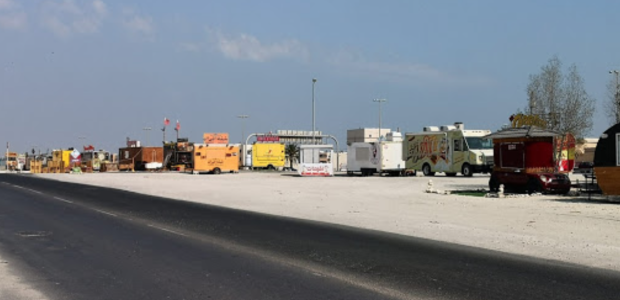
THE government will step up inspections on food trucks to curb the risk of customers getting upset stomachs due to cross-contamination of raw and cooked food.
The move follows a surge in operators with almost 200 new ‘kitchens on wheels’ set up across the country in the last two months, Public Health Directorate’s senior health inspector Haider Khalil Salman said.
The trucks – which sell everything from burgers to burritos – became a substitute during the pandemic for customers who couldn’t dine out and coveted something different than their regular carry-out options.
The fever for street food has not slowed as Covid-19 restrictions have eased and the authorities are keen to ensure they dish up healthy cuisine and don’t spread Bahrain’s version of ‘Delhi belly’ – an upset stomach accompanied by diarrhoea – also colloquially known by a number of other names, including ‘Montezuma’s revenge’, ‘Nile runs’ and ‘Estiqlal angst’.
“Food truck-owning is a growing business,” Mr Salman told the GDN. “Investors are happy owing to the limited space and outgoings involved in setting up the business. It’s easy to remove or relocate as well.”
“However, monitoring them is a huge challenge for us as we have a limited number of inspectors – we are only 30-strong.”
Mr Salman explained the risk of cross-contamination in food trucks – the process by which bacteria or other microorganisms are unintentionally transferred from one substance or object to another.
“Food trucks have small storage areas and function in a limited space and are hence prone to cross-contamination,” he explained.
“We inspect them just as we visit restaurants – at least once a month. However, truck owners keep moving from one place to another and keeping track of them is a challenge.”
Mr Salman said violations were registered in a system specifically developed for the purpose.
“Inspectors in each area have access to it. However, it is relatively new and we are trying to streamline it – we hope to overcome challenges soon,” he said.
“We’re a small team and hence members of Team Bahrain also assist us in our efforts.”
The GDN reported in April that the number of licensed food trucks soared by 186 per cent since they were launched in 2017, reaching 401 businesses, according to figures by the Industry, Commerce and Tourism Ministry.
Assistant under-secretary for control and resources Abdulaziz Al Ashraf had then stressed the government’s keenness to develop the sector and provide facilities for owners of these businesses.
Safety campaigns were also held, with Mr Al Ashraf noting that inspectors paid 373 visits to food trucks zone to monitor compliance with the regulations.
Owners of 13 unlicensed trucks were ordered to rectify their situation to avoid legal measures.
raji@gdn.com.bh
&uuid=(email))