

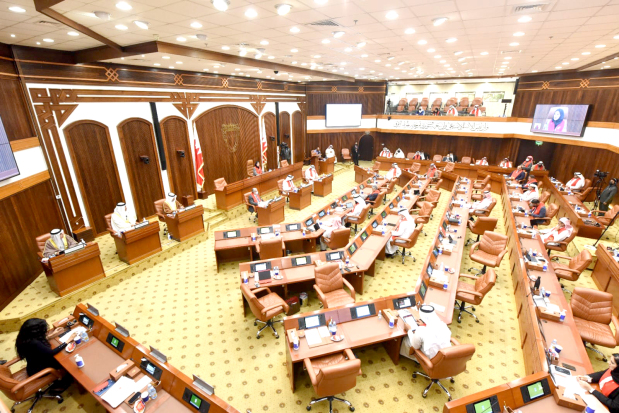
BAHRAIN’S municipal councils and the Capital Trustees Board look set to be granted greater decision-making authority in a significant move to give more power to the people.
It is hoped an amendment to a 19-year-old law will encourage fresh young blood to put their names forward and make a positive difference to their communities.
Parliament backed all conflicted articles with the Shura Council during its weekly session yesterday, including the biggest stumbling block over money.
Legislative and legal affairs vice-chairman Mohammed Al Abbasi withdrew his proposal for higher pay for councillors that had caused a stalemate last week.
It paved the way for a unanimous vote to overhaul the 2001 Municipal Law, which established the councils in 2002. Speaker Fouzia Zainal has referred the 27 approved articles to His Majesty King Hamad for ratification.
It would give the four local authorities – Northern, Southern and Muharraq councils and the Capital Trustees Board – power to choose and decide on municipal services and development plans within their boundaries, unless they involve the entire country.
It will also grant them power to draw up health and hygiene rules, take measures to protect the environment and issue advertisement and billboard policies for the area under their control.
Parliament public utilities and environment affairs committee chairman Khalid Bu Onk said the amendments would encourage more young people to run as candidates for municipal seats during next year’s national elections.
He added that it would also help current councillors and appointed trustees to push ahead with projects, schemes and initiatives that sometimes faced bureaucratic hurdles.
“The amendments are a huge step forward in democratic municipal representation,” said Mr Bu Onk. “It will lead to a huge breakthrough in municipal services as the country progresses and recovers from the impact of the pandemic.”
The councils and the board will be able to introduce rules for public places like hotels, tourism facilities, multi-purpose halls, restaurants, cafés, commercial outlets and industries, besides clamping down on illegal outlets and street vendors.
The new amendments will also allow them to suggest names for highways, districts, neighbourhoods and junctions in co-ordination with the government. Earlier, the four authorities could only suggest names for streets and roads.
The councils can receive grievances from people and take it up with ministries and government bodies – who would also be obliged to submit statistics on the progress of work.
The four bodies will also have the power to amend their internal administrative policies with the responsible minister publishing it in the Official Gazette, unless it is deemed a constitutional violation.
Should the minister concerned fail to respond to any decision by the council within 30 days, it will be considered approved. However, if it’s rejected and the councillors insist on implementing it, then the Cabinet could take a decision.
Meanwhile, distribution of government homes could be prioritised for people with disabilities and those suffering from hereditary and chronic illnesses under amendments to the 1976 Housing Law approved by MPs yesterday.
Two proposals by financial and economic affairs committee chairman Ahmed Al Salloom and Dr Masooma Abdulrahim have been merged by the public utilities and environment affairs committee.
A Housing Ministry representative told MPs during the session that homes of 390 families with members suffering from disabilities have been altered to cope with their needs, while requests by 5,000 families with cases of disabilities have been fast-tracked.
“The proposals require huge budgets and availability of plots since it means that exceptional cases should be prioritised over those currently on the waiting list,” said the Housing Ministry in writing.
“People with disabilities are already being given priority as houses for them are built with special facilities.”
And, another amendment to the law that grants the minister powers to add and offer new housing services has been approved.
All amendments to the law will be now drafted as ‘proper legislation’ by the government within six months and returned to the National Assembly for review.
mohammed@gdn.com.bh
&uuid=(email))