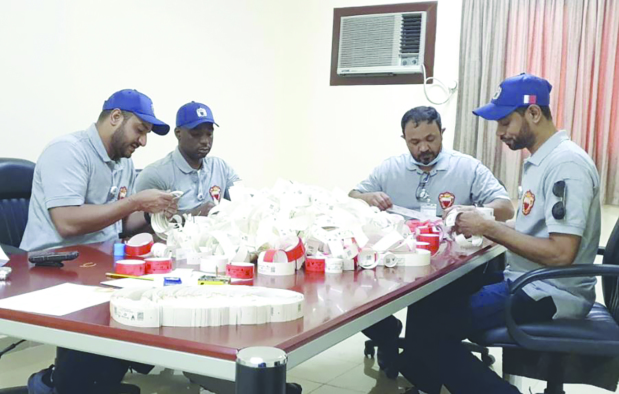
SPECIAL security bracelets were distributed to Bahraini pilgrims to ensure their safety as they complete the religious rituals.
The Bahrain Haj Mission Security Committee distributed the bracelets to the 2,094 pilgrims while also co-ordinating with the groups to ensure they are in line with Saudi regulatory procedures.
Mission chairman Shaikh Adnan Al Qattan said yesterday that all Bahraini pilgrims were in good health with a specialised medical team present in each of the eight groups.
“The groups are visited on a daily basis,” he added.
“The mission is also available 24/7 to receive any inquiries or suggestions; any instructions or developments are conveyed through phone calls or emails periodically.
“The security committee has co-ordinated with the Saudi authorities to set up a specific timetable for each group to ensure safety during grouping at Mount Arafat and Muzdalifa.”
Arafat, Mina and Muzdalifa, a few kilometres east of Mecca, are the main sites of Haj.
After spending the day on Mount Arafat, pilgrims move to Muzdalifa – on the first day of Eid Al Adha (the Feast of Sacrifice).
There they gather pebbles to throw at stone columns symbolising the devil.
The Bahrain Haj Mission management yesterday visited the medical committee clinic to ensure that all necessary supplies were available.
“Shaikh Al Qattan and the management also paid a special visit to Mina to follow up on the delivery of the camps to the Bahraini groups,” said a mission statement.
“The mission’s security committee also handed over bracelets to the pilgrims at the mission’s headquarters.
“These bracelets act like a permit to enter the religious places for the rituals.
“In each group there is a specialised medical team that co-ordinates with the medical committee of the mission to ensure the safety and health of the pilgrims as well as take measures if necessary.
“There is also special co-ordination with Saudi Arabia to arrange for pilgrims who test positive for Covid-19 to complete their pilgrimage.”
The Haj season began on July 1, marking the first post-pandemic pilgrimage season after two years of major disruptions caused by Covid-19.
Saudi Arabia, home to Islam’s holiest sites in Mecca and Medina, has enabled foreign travellers to perform Haj this year.
Only a few thousand citizens and residents attended the annual pilgrimage in the last two years as Covid-19 wreaked havoc across the global economy and curtailed travel.
reem@gdnmedia.bh