

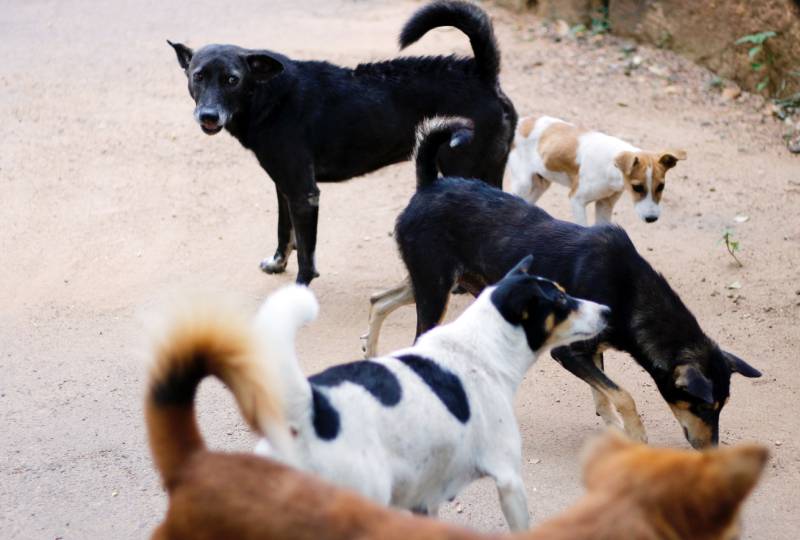
AN estimated 600 million stray dogs and cats live on the street worldwide. According to the World Health Organisation, Greece alone is estimated to have 3m stray dogs and cats, in a country with 11m inhabitants! Another report says that India has the largest number of strays in the world, with more than 35m.
The problem of stray dogs is global, with many incidents of street dogs attacking children and adults in many parts of the world. While some people are of the opinion that street is the natural habitat of stray dogs, others are of the view that stray dogs create a nuisance for human beings and they should be moved to dog shelters.
This dichotomy brings to the fore the paradox of importance of human rights versus animal rights!
When a man is attacked by other men, the law prosecutes and punishes the culprits. But when a precious human life is lost due to stray dog attack, who is to blame? Can the culprit dog be dragged to court? It is this aspect that the advocates of animal rights fail to understand.
In some countries like India, stray dog attack is frequent news but at the same time animal sympathisers feeding the pack of stray dogs in residential areas of the city is a common sight. It often leads to skirmishes between the dog feeders and the apartment dwellers.
Recently, during my visit to my sister’s home in Mumbai, from nowhere a dog followed me and bit my calf as soon as I entered the apartment premises. My sister told me that it was a stray dog and the apartment dwellers fed it regularly and they were not allowed to chase it away!
The so-called animal rights activists argue that stray dogs never attack human beings unless they are provoked. That is far from the truth. I was attacked unprovoked despite being accompanied by my brother-in-law. There have been incidents of children carrying meat or fish being mauled to death.
There are hundreds of dogs roaming the streets in many cities and the municipal authorities do not do more than catching the aggressive canine, neutering/vaccinating and then releasing them back in the same place. Even the authorities are not able to catch all the stray dogs as new ones from the neighbouring areas keep moving in.
There are laws that prevent the authorities from eliminating the aggressive stray dogs. There are also people who have a soft corner for the aggressive dogs. In such a situation, the victims of stray dog attacks and other concerned people feel helpless in voicing their human rights.
So the most pertinent question everyone should ask is where do the stray dogs come from? Has it always been their natural habitat?
In the case of wild animals, forests are their natural habitat. But what about dogs? Should dogs be kept as pets or should they be roaming the streets chasing moving vehicles and demanding food from the passers-by or apartment dwellers?
Stray dogs are a man-made problem. Every stray dog was once someone’s pet that was abandoned.
They now risk being hit by a car, susceptible to disease or other dangers on the street. Furthermore, they can pose a public health and safety risk to communities. They are bad for tourism and the general perception of a community and country. The existence of stray dogs cannot be allowed to perpetuate. The complexity of the problem requires a systemic solution.
There are three sources of stray dogs: lost dogs, abandoned dogs and dogs born stray.
The solution?
There is only one solution: responsible pet ownership.
To prevent dogs from being lost, all pets should carry collars with name tags with the owner’s contact telephone number. The people who abandon dogs intentionally, should be given the option of handing them over to the adoption centre. The dogs that are born stray need to be moved to adoption centres from where interested families could adopt them.
Owners have a duty to provide sufficient and appropriate care for their pets, microchip and ideally neuter, or prevent uncontrollable breeding. The care implies owners need to provide the resources such as food, water, shelter, healthcare and social interaction necessary for an individual pet to maintain an acceptable level of health and well-being in its environment.
Anthony Dsouza,
Lecturer in English
Bahrain Polytechnic.
&uuid=(email))