

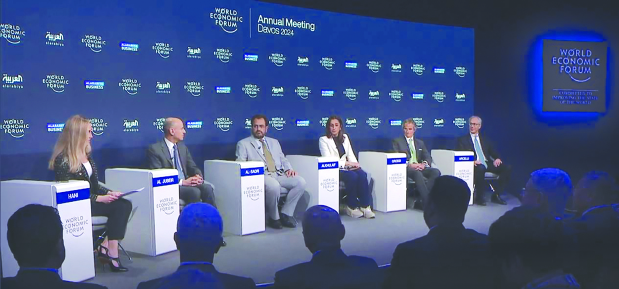
Blueprint Bahrain is the roadmap that enables the kingdom to meet climate goals, play its part in the Mena becoming a clean energy export hub, while realising its sustainability agenda, a top minister told a gathering of influential figures at the World Economic Forum in Davos.
According to Sustainable Development Minister Noor Al Khulaif like its GCC peers, Bahrain is investing heavily in energy diversification with a focus on renewables and climate-friendly technologies, after decades of dependency on fossil fuels.
“Unveiled at COP28, Blueprint Bahrain is the kingdom’s ambitious strategy to combat climate change and achieve net-zero emissions by 2060. It rests on three pillars: mitigation, adaptation, and investment,” she said during a panel discussion themed ‘Bold Steps for a Sustainable Mena’.
“Mitigation focuses reducing greenhouse gas emissions through transitioning to cleaner energy sources, improving energy efficiency, and protecting ecosystems, whereas adaptation is about building resilience to the impacts of climate change, such as rising sea levels and extreme weather events,” she explained.
Investment, which focuses on mobilising financial resources to support the implementation of the plan, including through public-private partnerships, is the third pillar.
Ms Al Khulaif explained that key mitigation actions include doubling renewable energy in the electricity mix by 2035, quadrupling mangrove coverage, and improving energy efficiency.
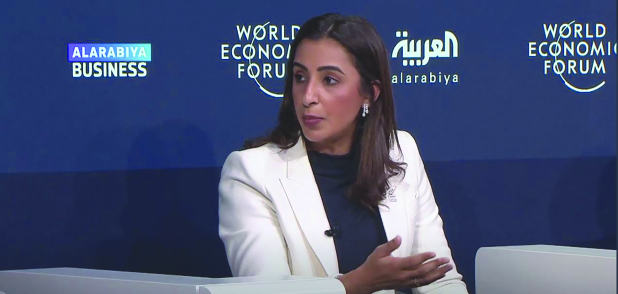
Ms Al Khulaif speaks during the discussion
“As for adaptation, measures include coastal protection, water security initiatives, and ecosystem preservation, while a $750 million climate tech fund has been established, and public-private partnerships are encouraged to invest in growth companies and innovation that will help the transition to a low carbon economy,” she said.
Beyond environmental benefits, Blueprint Bahrain aims to stimulate the economy, particularly in the clean energy sector. Improved public health and quality of life are also anticipated.
The minister emphasised an “SDGs++” approach, exceeding the UN Sustainable Development Goals and including additional targets like economic transformation.
“Sustainability in Bahrain is SDGs++ so we adopted the SDGs of course and we’re progressing in trying to achieve those by 2030 but we have another set of targets to achieve and one example is the transformation that we’ve been working on over a couple of decades now to transform the economy and become less reliant on oil.”
She underlined the significant shift in Bahrain’s economy, with the non-oil sector now dominating GDP. This implies prioritising economic diversification as a key sustainability pillar.
Ms Al Khulaif said, “For us the oil sector used to be the biggest sector by far and based on the latest GDP results, we have the financial services sector that is the biggest and the non-oil sector is now about 83 per cent of Bahrain’s GDP.”
Her fellow panellist, Oman’s Economy Minister Said Al Saqri, highlighted that the sultanate has set an ambitious goal to become one of the largest green hydrogen producers and exporters globally, targeting production of 1m tonnes annually by 2030.
Emphasising the critical role nuclear power can play in the Mena region’s transition to clean energy was International Atomic Energy Agency (IAEA) director-general Rafael Mariano Grossi.
He said, “While we recognise the region’s abundant solar and wind resources, nuclear is absolutely a solution for countries like the UAE and Saudi Arabia and going for the best mix possible is crucial, and nuclear unlocks the possibility for a decarbonised electricity grid in many countries.”
Also speaking was Saudi Arabia-based ACWA Power chief executive Marco Arcelli who said the energy provider has comprehensive plans to localise the renewable energy sector. This ambitious strategy directly supports Saudi’s goal of meeting half its energy needs with clean sources by 2030.
Saudi Arabia aims to lead the way in building a more sustainable world, not just follow existing standards. This was emphasised by Adel Al Jubeir, Minister of State for Foreign Affairs and Climate Envoy, during the discussion.
He stressed the growing global demand for energy and the need for renewable sources to meet that demand. He pointed to the Saudi Green Initiative as a prime example, showcasing its multi-billion dollar investment in over 80 public and private initiatives aimed at combating climate change.
The discussion was moderated by Al Arabiya senior presenter Nadine Hani.
avinash@gdnmedia.bh
&uuid=(email))