

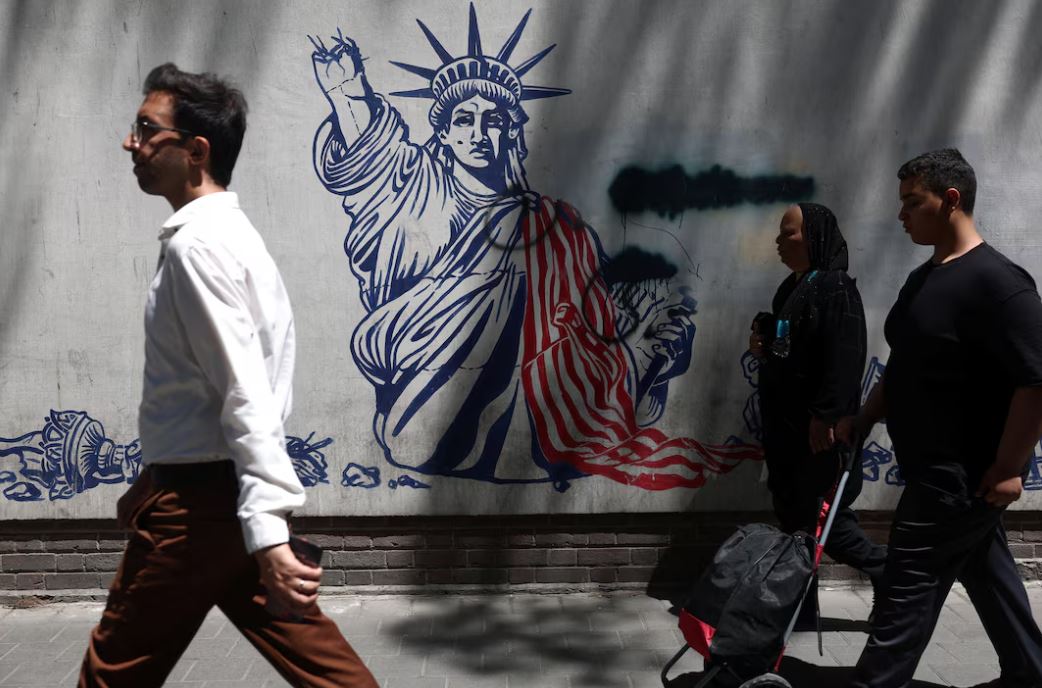
Iran is reviewing a proposed agreement with the US to halt their war but has not communicated with Washington for a few days, Iranian media reported yesterday, though US President Donald Trump said negotiations had been going on continuously.
More than three months after the US and Israel launched strikes against Iran, the conflict is stuck in a stalemate, with a shaky ceasefire in place while the pivotal Strait of Hormuz remains largely shut to maritime traffic.
Iran has not yet responded to a proposed final text of a temporary deal, and was taking a “stern” approach given what it sees as a history of US non-compliance and longstanding mistrust, Mehr News Agency cited a source as saying.
The semi-official Fars agency, also citing a source, added that messages on the possible deal, or memorandum of understanding, had stopped a few days ago, with the last one being Tehran’s “clear message” over Lebanon, where Iran is seeking a halt to Israel’s incursion against its ally Hizbollah.
Trump said that suggestion was “false and erroneous” and that the conversations between the two sides had continued without a pause.
“The conversations between us have been going on continuously, including four days ago, three days ago, two days ago, one day ago, and today,” he said in a social media post. He made similar comments on Monday, before the Iranian report.
Trump said on Monday there would be a deal over the next week to extend a ceasefire agreed in early April and reopen the strait. Since mid-March, he has repeatedly said he is close to a deal, which would postpone thorny issues including the future of Iran’s nuclear programme. A ceasefire has largely held since early April, but Iran and the US have exchanged strikes several times over the past week.
The war that began on February 28 has killed thousands of people, mainly in Iran and Lebanon. It has caused global pain by pushing up energy prices since Iran effectively closed the Strait of Hormuz, which previously carried about a fifth of global supplies of oil and liquefied natural gas.
Yesterday, Israel kept up strikes on a string of towns in southern Lebanon, Lebanese security sources said, despite a US-mediated partial ceasefire announced on Monday.
That would entail Israel refraining from strikes on Beirut and Hizbollah-controlled southern suburbs of the Lebanese capital, while the Iran-aligned group would halt attacks on Israel.
But the announcement failed to reassure many Lebanese, 1.2 million of whom have been displaced, and the din of an Israeli drone over Beirut kept residents on edge yesterday.
“Every time we return to our homes, there is a warning for us to be displaced again,” said Faten Al Chehime, who fled to a displacement camp from her home in Beirut’s southern suburbs.
In the wider war, Iran is pushing for a limited interim agreement as it tries to ease economic pressure while avoiding major concessions on its nuclear programme, according to Iranian sources.
Tehran is seeking an end to hostilities across all fronts including Lebanon, access to billions of dollars in oil revenues, waivers on crude exports, a lifting of a US blockade on its ports, and continued leverage over the strait. Trump is under pressure to reopen the strait and curb US fuel prices while not making concessions to Iran.
l The International Atomic Energy Agency (IAEA) is offering the UAE technical as well as moral support, IAEA chief Rafael Grossi said yesterday after a visit to the site of a nuclear power plant that came under a drone attack last month.
Grossi said Emirati authorities had reacted very quickly to the attack at the Barakah Nuclear Power Plant by shutting down a reactor because of the loss of external power. He said a number of activities would take place to complete repairs at the plant but provided no further details.
&uuid=(email))