

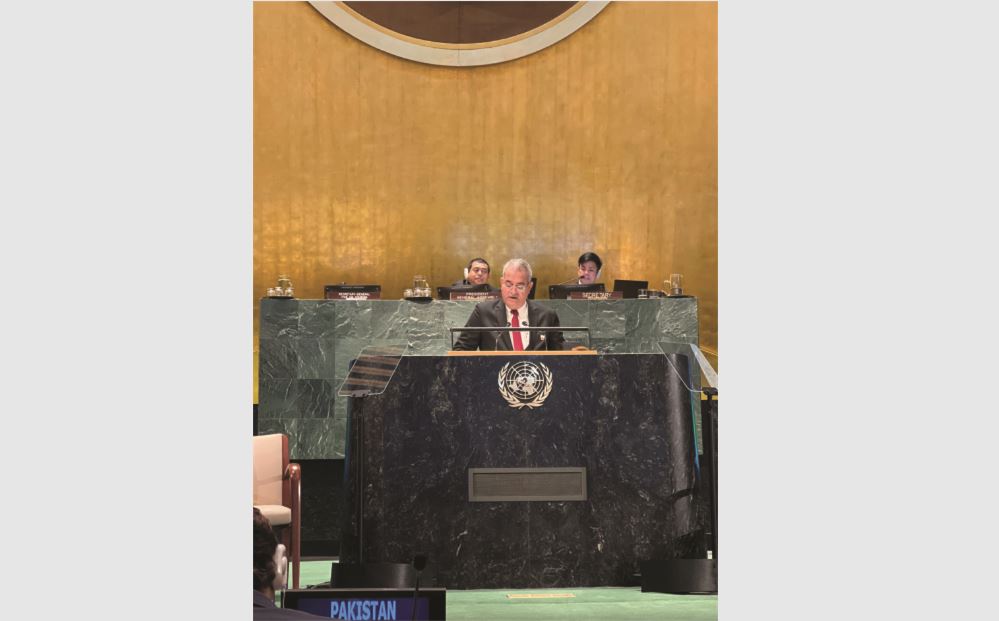
Bahrain Tourism and Exhibitions Authority (BTEA) participated in a high-level meeting on sustainable tourism recently held on the sidelines of the 78th session of the United Nations General Assembly in New York.
For the first time, the meeting included a dedicated agenda item to discuss the topic of sustainable tourism.
In this regard, the authority presented a paper highlighting the achievements of the Bahrain, reaffirming the kingdom’s commitment to achieving the goals of sustainable development through the implementation of wide-ranging economic programmes and developmental projects.
These efforts align with the comprehensive development process led by His Majesty King Hamad and with the follow-up of His Royal Highness Prince Salman bin Hamad Al Khalifa, Crown Prince and Prime Minister, in line with Bahrain Economic Vision 2030 and the 2022-2026 Tourism Strategy.
During the event, Dr Ali Follad, consultant for BTEA, highlighted in his speech the efforts exerted by Bahrain to promote sustainability in the tourism sector and preserve the environment for future generations.
These efforts encompass various aspects, including the development of tourism infrastructure and the hotel sector, the enhancement of marine tourism while protecting natural and environmental resources, and the promotion of cultural and heritage tourism.
These endeavours aim to accelerate the achievement of sustainable development goals, embed sustainability principles in the promising tourism sector, and diversify non-oil national income sources.
Dr Follad emphasised the kingdom’s encouragement of sustainability in the entertainment industry within the tourism sector, fostering the concept of responsible tourism and creating sustainable value by enhancing its impact on economic and social development within local communities.
He also highlighted the numerous initiatives and quality projects implemented by the kingdom to promote sustainability in the tourism sector, such as the development of nature reserves and coastal tree reserves, promoting eco-friendly practices, green solution, and adopting sustainability in the architectural design of hotels, tourist facilities, coasts and entertainment complexes.
One notable example, he said, is the ‘sustainable architectural design of Al Dana Amphitheatre’.
Furthermore, Dr Follad mentioned the kingdom’s focus on promoting sustainability in tourism-related infrastructure, including Bahrain International Airport, and the preservation of the historical and cultural identity of buildings and cities in Bahrain in general, citing the launch of the Muharraq Development Plan.
Dr Follad highlighted the efforts of the Bahrain International Circuit, ‘The Home of Motorsport in the Middle East’, in the field of sustainable tourism. “It earned international recognition through winning The Event Innovation Award at the F1 Promoter Awards in London,” he added. “This recognition was a result of its pioneering initiatives in solar energy, energy conservation and the utilisation of innovative technology.”
He also acknowledged Bahrain’s awareness of the importance of sustainable tourism in the development of the tourism sector and the preservation of the environment for future generations. “This has led Bahrain to adopt sustainable tourism as a strategic approach to ensure a more prosperous future for the tourism sector,” he concluded.
&uuid=(email))