

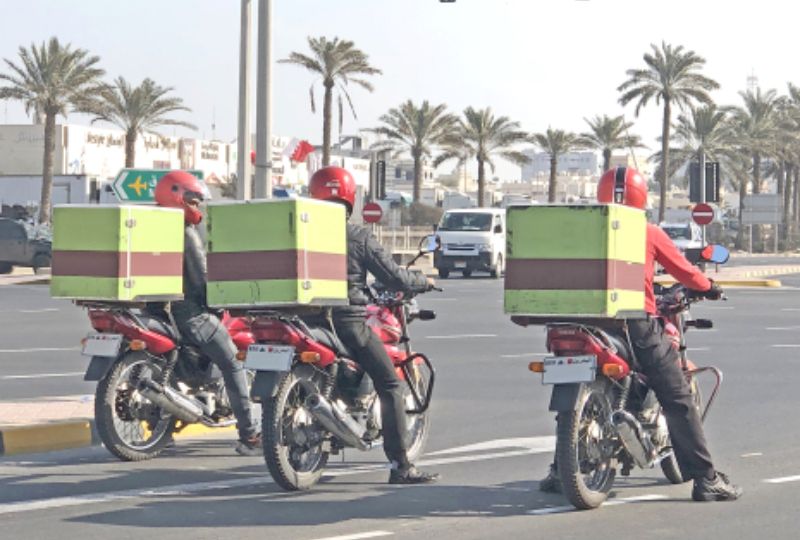
With a significant rise in the demand for delivery services, particularly in urban areas, it is essential to ensure the safety, well-being and efficiency of the riders who play a crucial role in our daily lives.
Inspired by the model implemented in Dubai, I believe Bahrain can greatly benefit from adopting a similar approach.
Here are a few key points to consider:
Enhancing road safety: Rest areas provide a safe space for delivery riders to wait for orders, reducing the risk of them parking on busy streets or in unsafe locations. This initiative can help prevent accidents and ease traffic congestion in high-demand areas.
Improving rider welfare: Delivery riders often work long hours under challenging conditions. Providing designated rest areas with basic amenities such as seating, shade and hydration stations would allow them to rest, rehydrate and recharge between deliveries. This can lead to better job satisfaction and overall well-being.
Boosting efficiency and productivity: Well-rested riders are likely to be more focused Rest areas for delivery riders a good initiative and efficient in their work. By minimising downtime and ensuring that riders are ready to respond quickly when orders come in, this initiative can help enhance the overall delivery experience for customers.
Supporting the community: Establishing rest areas demonstrates a commitment to the welfare of those who contribute significantly to our economy. It reflects positively on busi- nesses and the broader community, showing that we value and care for the people who keep our daily operations running smoothly. This initiative will not only benefit delivery riders but also contribute to a safer and more efficient urban environment in Bahrain.
Fatima Abrar
* * *
Delivery riders across the Middle East play an important role for the catering industries across the GCC. They are essentially one of the ‘unsung heroes’ who work tirelessly around the clock to ensure that online food orders arrive on time, whilst maintaining the highest standards in food quality.
Bahrain needs to deploy rest areas across the kingdom for these riders when they are temporarily waiting for orders to be processed. This scheme has already been implemented in Dubai where around 20 air-conditioned rest areas have been introduced in Phase 1 with plans to double that in the coming months.
Firstly, the riders often work long hours in challenging conditions, including extreme weather, heavy traffic and under pressure to meet delivery times. Rest areas offer a place to recharge physically and mentally, which can improve their overall well-being and reduce fatigue-related accidents. These rest areas could provide essential amenities like air-conditioned seating areas, vending machines, water dispensers, toilets, and charging stations for their devices, offering a more comfortable waiting period between orders.
Secondly, rest areas can also serve as community hubs for the riders to connect and socialise. These areas could also be used to share information, offer health check-ups and provide access to training resources that improve riders’ skills and safety.
There are also business benefits when you have a satisfied workforce since riders are more likely to be productive and provide better service to customers when feeling fresh. Additionally, these rest areas can be strategically located to reduce waiting times leading to faster deliveries and greater efficiency in the logistics chain.
Lastly, rest areas could boost the public perception of food delivery since we live in a world where brand reputation is so crucial. Such initiatives could improve customer loyalty and attract more riders to the platform.
Rest areas for delivery riders represent a practical and beneficial initiative that could have a positive impact on all stakeholders
&uuid=(email))