

Organisations in the contemporary dynamic and turbulent environment experience multiple challenges. The phenomenon of VUCA – explained as volatility, uncertainty, complexity and ambiguity – affects the efficiency and effectiveness of organisational and individual performance. EVERY year on this day (Nov 29), the international community stands in solidarity for the dignity, rights, justice and self-determination of the Palestinian people. This year’s commemoration is especially painful as those fundamental goals are as distant as they have ever been.
The employers and employees must understand that there is a need for internal and external drives to make it compulsory for both parties to manage change to survive and be successful. Hence, resilience becomes very imperative on the part of the employees to conduct their activities, and HR departments must assist them in integrating performances regarding organisation culture and norms.
Workplace resilience is an important attribute both on the individual and organisational level to understand adverse situations and allow individuals to perform outstandingly. Individuals must confront the negative circumstances with sophistication and confidence.
Workplace resilience is the ability to not only cope with but also to perform and thrive under adversity, sustaining performance and productivity. Resilience involves the capacity to recover from adversity, adapt to altered circumstances and maintain a positive attitude during difficult times.
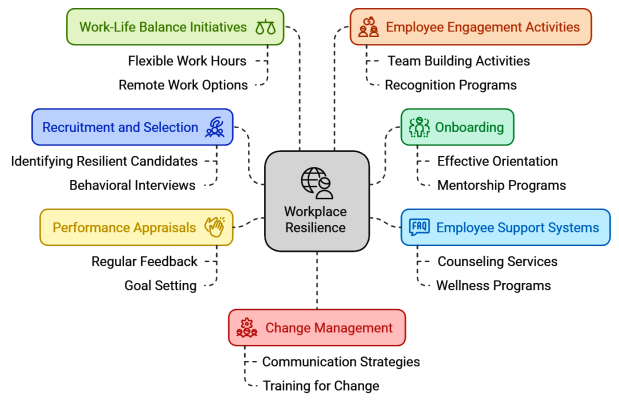
Organisations are increasingly recognising the need to develop the resilient capabilities of their people in the current challenging environment. No organisation is unaffected to direct and indirect problems that analyse the efficiency and well-being of employees. That reality makes HR very important in developing resilient behaviours among employees. HR must, therefore, engage in and implement superior practices that enhance resilience:
- Recruitment and Selection Process: The HR department can considerably impact the selection of candidates that are resilience capable. By integrating resilience-related assessments and interview questions, HR can identify those who reveal an aptitude to rise above difficulties and cope with stressors effectively.
- Onboarding and Orientation: HR is in a position to provide employees with the necessary tools and resources for the development of resilience. This may involve training programmes focused on stress or job anxiety management, techniques for building resilience, and information about available organisational resources. By establishing a positive atmosphere from the outset, HR can assist new hires in cultivating the resilience needed to tackle workplace challenges.
- Employee Support Systems: HR may develop and implement support structures specific to the resilience of employees. It could also involve mental health resources, employee assistance programmes and team-building exercises to promote camaraderie and work together. Through provision of support HR can create a culture of openness at work so that members of staff are able to communicate their thoughts and require help when the need presents itself.
- Performance Appraisals: HR may include resilience as a performance appraisal criterion. Recognising and rewarding employees that display resilience in their day-to-day work process, HR can encourage resilience culture at the whole organisation.
- Work-Life Balance: There is advocacy for work-life balance measures that help employees to be more resilient. Through flexible work arrangements, time off to practice self‐care, and promotion of and commitment to well‐being, HR can create an enabling environment for employees to replenish and maintain their resilience.
- Employee Engagement: HR can directly empower employees in interventions for resilience. This could involve team-building activities, mentoring programmes and professional development. Attention given to employee development enables the skills and outlook necessary to thrive in the face of adversity.
- Change Management: Effective change management depends on the HR being able to continue to communicate effectively with employees by creating a culture of openness/transparency, leadership, compassion and professional development. Through emphasising employee development, HR can facilitate the development and mindset of the people to deal with challenges in a relatively effective way. Using a supportive and empathetic approach, HR can mitigate resistance and provide employees with the confidence to think about change in a confident way.
Conclusion: Workplace resilience is a crucial asset for both individuals and organisations. Through implementing HR practices that cultivate resilience, organisations can enable a supportive and stimulating work environment that benefits employees by promoting their well-being and improving their productivity. With recruitment and selection, onboarding, employee support programmes, performance appraisals, work-life balance efforts, engagement practices and change management, HR can play a critical role in developing resilient teams. By investing in employee resilience, organisations can tackle obstacles, adapt to change, and flourish in today’s ever-evolving business environment. This concept can be further understood with the help of the accompanying flow chart diagram.
Dr Zafrul Allam
Assistant Professor
Management & Marketing Department
University of Bahrain
E-mail: zallam@uob.edu.bh
&uuid=(email))