

A tender for the National Health Insurance Scheme (Sehati) coverage is set to be launched early next year.
The Supreme Council for Health (SCH) has announced plans to issue a tender for insurance companies to provide coverage for the basic bundle of Sehati.
According to SCH secretary-general Dr Ibrahim Al Nawakhda, the target is to have the scheme running next year.
It’s a major initiative aimed at reforming Bahrain’s healthcare sector to deliver accessible, high-quality and sustainable medical services to all citizens and expatriates.
A health insurance fund – Shifa (Arabic for healing) – has been already formed to oversee the launch of Sehati.
Under the scheme, mandatory package for citizens is financed by the state and covers medical treatment at all government facilities.
The planned services under Sehati’s compulsory packages for citizens include comprehensive primary healthcare, inpatient, outpatient and accidents and emergency services in Bahrain, in vitro fertilisation with conditions, medicines, all types of medical examinations, and treatment abroad if required.
Services such as plastic surgeries, cosmetic dentistry, optical, weight loss surgeries, private nursing care, acupuncture, alternative medicine and private rooms are not included.
Optional package features the government paying 60 per cent of the fees with the patient footing 40pc of the bill at private healthcare facilities.
Foreign residents are covered under the mandatory package either directly or through insurance companies, while additional services can be purchased, if desired.
Sehati is aligned with Bahrain’s Economic Vision 2030, which prioritises enhanced social welfare and quality of life for all residents.
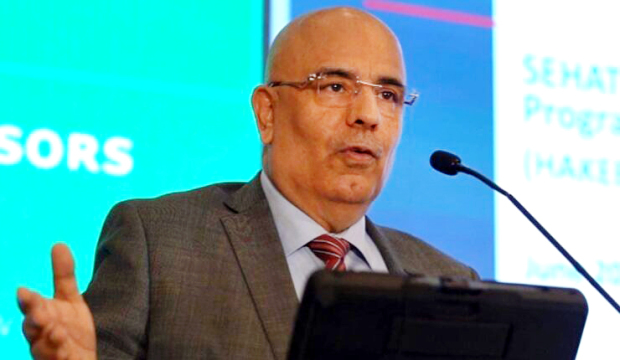
Dr Al Nawakhda
“There are multiple targets that we hope to achieve through the launch of the scheme and as it progresses,” said Dr Al Nawakhda.
- Improve healthcare accessibility: Provide universal healthcare coverage for Bahrainis and expatriates, ensuring that financial constraints do not prevent access to essential medical services.
- Enhance healthcare quality: Ensure the delivery of world-class medical services through effective oversight and partnerships with experienced healthcare providers.
- Promote cost efficiency: Optimise the allocation of resources in the healthcare sector by implementing a competitive insurance-based system.
- Encourage private sector participation: Open the door for private insurers and healthcare providers to play a larger role in the system, enhancing innovation and efficiency.
Dr Al Nawakhda said the scheme is expected to be fully operational by 2025.
“While the groundwork for the scheme has been laid over the past few years, the tender process, to be issued early next year, will select the insurance company that will manage and provide the basic health coverage,” he said.
“The tender process will be transparent and competitive, ensuring that only qualified and capable insurers are selected to participate in the programme and from which a winning bidder is selected.”
Dr Al Nawakhda pointed out that the non-compulsory bundles would continue to be handled by private insurance companies.
“We are finalising all details related to nationals, foreigners and visitors,” he said.
“It is much easier to do calculations with the private sector, but it is more difficult with government medical facilities that comprise 80pc of the medical services’ providers,” he said.
“The upcoming tender for the basic bundle marks a pivotal step in Bahrain’s journey towards universal health coverage.”
Nineteen health benefit categories that citizens would get through the compulsory free-of-charge package have been drawn up including contagious diseases.
Compulsory packages for expatriates have also been prepared with work currently ongoing to organise the implementation mechanisms and benefits in co-operation with experts and consultants in the field of health insurance.
Various factors including the pandemic has delayed the launch of Sehati, which was originally due to be implemented in 2019.
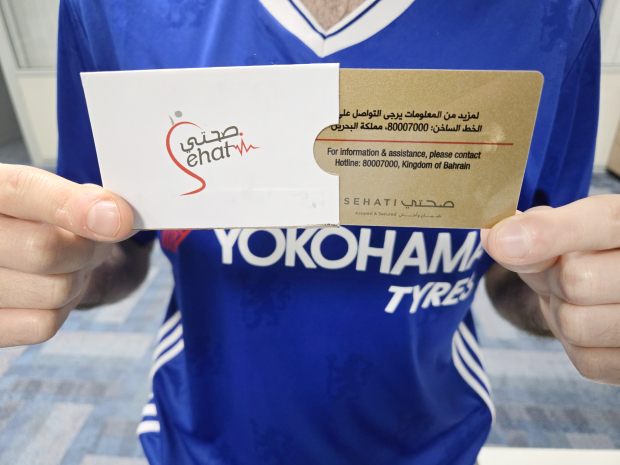
The government has been working on several aspects of the project, the latest of which is the Sehati health cards, already distributed.
The chip-enabled card contains the patient’s medical history, test results, diagnoses and prescription details, which can only be read by authorised physicians.
Thirty-eight medical facilities have been earmarked to provide services under Sehati.
Dr Al Nawakhda was speaking yesterday during the third Manama Health Congress and Expo which got underway at the Crowne Plaza.
The three-day event, which ends today, also features the largest international medical exhibition in Bahrain, offered health professionals the opportunity to engage with some of the best minds in the world in the field of healthcare.
mohammed@gdnmedia.bh
&uuid=(email))