

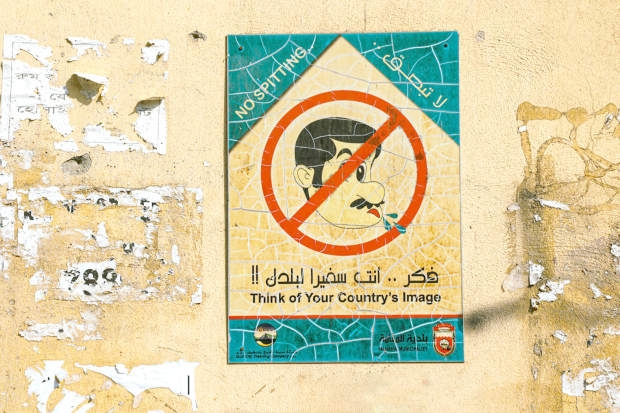
A call for stricter enforcement of public order rules has gone out from municipal councillors fed up of miscreants urinating and spitting in public and getting away with their foul behaviour.
They are calling for the implementation of a comprehensive plan to enforce public cleanliness laws following multiple incidents of bad behaviour highlighted by concerned constituents.
Northern Municipal Council members have accused the Municipalities Affairs and Agriculture Ministry of failing to enforce the 2019 Public Cleanliness Law effectively, calling for urgent action to address the ongoing issues.
The law threatens a hefty fine on offenders but they claim weak monitoring and enforcement mechanisms have undermined it.
Under the law, public urination and spitting are among a number of illegal activities that can attract fines of between BD50 and BD300.
The council’s financial, administrative and legislative committee chairman Dr Mohsin Abdulla criticised the current system, noting that municipal inspectors’ working hours end at 2.15pm daily.
This, he argued, allows some violators to commit offences without fear of being penalised.
“There is a huge lapse in implementation and monitoring that is giving the wrong image about cleanliness in the country,” said Dr Abdulla.
“This is not to overlook the efforts of nationals and residents who are committed to cleanliness, but there is a clear lack of accountability for those who violate the rules outside inspectors’ working hours.”
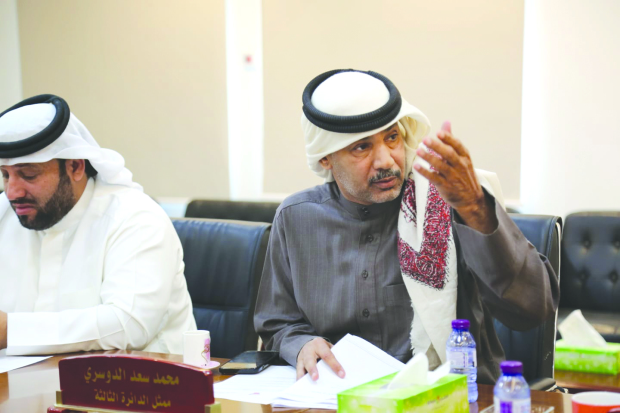
Dr Abdulla, left, with Mr Al Dossary
Dr Abdulla also questioned the practicality of enforcing the law.
“In regard to implementation and monitoring, how would an inspector react whenever spotting someone urinating? Will they take a video as evidence and issue a fine on the spot? Despite this being an ongoing despicable practice, no action has been taken since the issuance of the law six years ago.”
The 2019 Public Cleanliness Law was introduced to curb behaviour such as littering, spitting and urinating in public, with steep fine penalties. However, councillors claimed that the ‘lack of effective implementation’ had rendered the law ‘largely ineffective’.
“This situation is unacceptable,” said Dr Abdulla. “We need immediate action to uphold the law and maintain public cleanliness. It’s not just about penalties – it’s about protecting the image and health of the country.”
The councillors called on the ministry to devise a clear, actionable plan, ensuring that violators be held accountable regardless of the time of day. They pointed out that public cleanliness was a shared responsibility that required effective monitoring and enforcement to succeed.
Councillor Mohammed Al Dossary echoed Dr Abdulla’s concerns, stressing the need for inspectors to work ‘extended hours’ to ensure consistent enforcement.
He highlighted the gaps in coverage, pointing out that violations often occurred after inspectors finish their shifts, which run from 7am to 2.15pm Sunday to Wednesday, and 7am to 2pm on Thursdays.
“After hours, people can blatantly violate the law because there is no one to stop them,” suggested Mr Al Dossary. “It’s not just a matter of public commitment to cleanliness – there are no inspectors available to address these violations.”
The councillors argued that the ministry must address the issue by extending inspectors’ working hours or recruiting more to cover late-hour shifts, or introducing alternative measures such as surveillance technology and empowering other authorities to enforce the law.
mohammed@gdnmedia.bh
Top stories for today:
Khaldiya clinch title
Traditional clothes plan for workplaces backed
Councillors call for plan to enforce public cleanliness
&uuid=(email))