

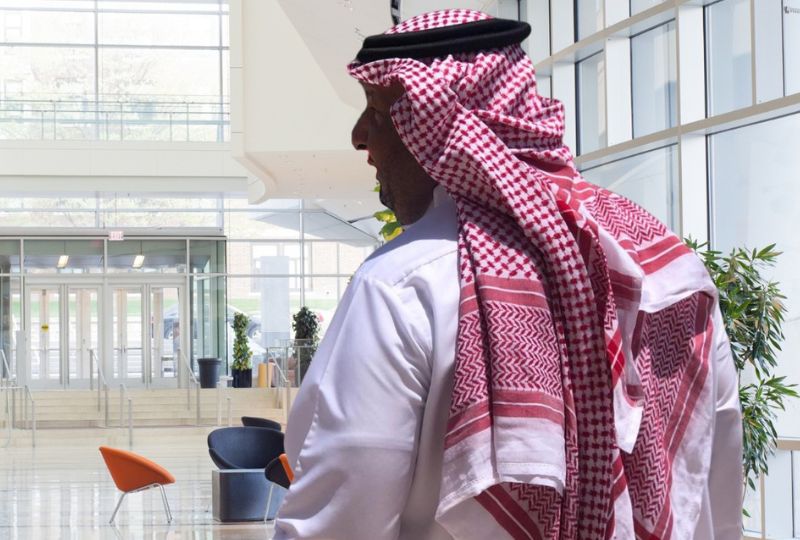
Traditional clothes could be made mandatory at workplaces as MPs unanimously approved the move yesterday.
The Strategic Thinking Bloc, which presented the proposal, believes the move, if implemented, would protect and preserve GCC identity.
Bloc spokesman Khalid Bu Onk, who is spearheading the proposal, stressed the need for a new curriculum to be taught in schools across the GCC on the unified Gulf identity.
“It should be made mandatory for all GCC nationals to wear traditional clothing to their workplaces,” he said.
“Special joint programmes need to be broadcast and promoted through the Press, media and social media platforms,” he added.
“Collectively, these measures would help preserve Gulf identity.”
Saudi Arabia had earlier made it mandatory for civil servants to wear traditional dress to work.
Information Affairs Minister Dr Ramzan Al Nuaimi commenting on the national identity part of the proposal, said several mutual agreements have been signed with GCC states to promote national belonging, heritage and identity.
“We are keen on spreading the Gulf identity in whatever programmes, activities and events we hold,” he added.
“There are joint and solo projects that push towards highlighting our proud Gulf identity.”

Mr Bu Onk
Parliament also unanimously approved the following proposals and referred them to the Cabinet for review:
- Renovating old historic mosques in the Muharraq Governorate Constituency Three (old Muharraq), presented by services committee vice-chairman Mohammed Al Olaiwi.
- Moving the Sunni and Jaffari Waqf (Endowments) Directorates from under the direct supervision of the Justice, Islamic Affairs and Endowments Ministry to the Supreme Islamic Council, presented by five MPs led by Speaker Ahmed Al Musallam and legislative and legal affairs committee chairman Mahmood Fardan.
- Opening new specialisations in the Bahrain Teachers College, presented by Muneer Suroor.
Education Minister Dr Mohammed Mubarak Juma revealed that new specialisations were being introduced on a continuous basis such as a Master’s degree in school management, higher diploma in schools’ leadership and higher diploma in special education.
- Creating more job opportunities in new investment projects, presented by five MPs led by foreign affairs, defence and national security committee vice-chairman Hassan Ibrahim.
The General Federation for Bahrain Trade Unions backed the proposal.
- Imposing timings for infrastructure work in and near residential areas, presented by five MPs led by public utilities and environment affairs committee vice-chairman Bader Al Tamimi.
Works Minister Ibrahim Al Hawaj, Electricity and Water Affairs Minister Yasser Humaidan and Municipalities Affairs and Agriculture Minister Wael Al Mubarak stressed that it may contradict urgent or emergency work that requires unfortunate attendance off hours.
The Capital Trustees Board and Bahrain’s three municipal councils have backed the move, while asking for exemptions to urgent and emergency work.
- Introducing new water tariffs for families of six and more members under one meter, presented by financial and economic affairs committee chairman Mohammed Al Marafi.
Under it, the charges would be 25 fils for usage from zero to 100 cubic metres, 80 fils from 101 to 150 cubic metres, and 200 fils for usage above 150 cubic metres.
Mr Humaidan said government support for Bahrainis in their first household are BD243 million, with BD85m alone for water.
- Allowing property owners to open shops on Road 77 in Jidali, presented by Zainab Abdulamir.
The Municipalities Affairs and Agriculture and Housing and Urban Planning Ministries said permits were being issued to open shops.
The Capital Trustees Board and Southern Municipal Council said properties undergo technical assessment to address location suitability, traffic impact and accessibility.
mohammed@gdnmedia.bh
Top stories for today:
Khaldiya clinch title
Traditional clothes plan for workplaces backed
Councillors call for plan to enforce public cleanliness
&uuid=(email))