

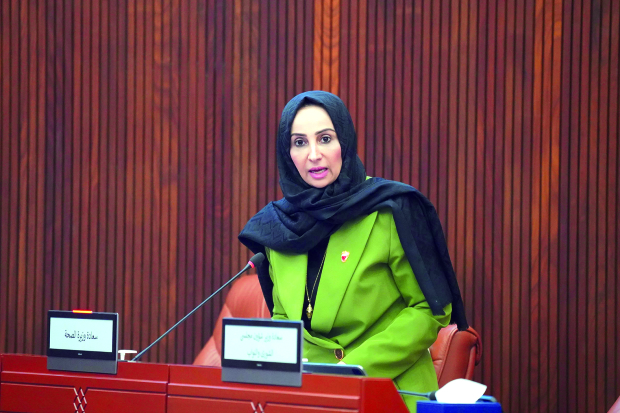
A national plan that outlined strategies and policies to combat antimicrobial resistance (AMR) aimed at enhancing Bahrain’s healthcare was rejected by MPs yesterday because it duplicated existing legislation and planned moves to tackle the issue.
The proposal by the Shura Council would have amended the 2018 Public Health Law and included measures to reduce antibiotic usage, set targets for lowering the prevalence of resistant microbes, and establish mechanisms to raise awareness among healthcare professionals and the public.
It has been referred back to the Shura Council for further review.
Health Minister Dr Jalila Al Sayyed argued that the objectives of the proposed amendment aligned with the existing responsibilities of the National Communicable Diseases Control Task Force.
“The decree already mandates measures for prevention and treatment of communicable diseases, including the identification of disease-causing microbes and the appropriate selection of antibiotics based on microbial resistance,” she said.
“Given that a legal framework already exists, the government contends that the proposed legislation is unnecessary as its objectives are already being met. Furthermore, the government has announced plans to establish a specialised task force on antimicrobial resistance (AMR) under the National Communicable Diseases Control Task Force.
“This new team would be responsible for drafting a national action plan that includes strategies to reduce antibiotic usage, lower the prevalence of resistant microbes, and raise public awareness.”
Meanwhile, MPs postponed for two weeks government-drafted amendments to the 2013 Real Estate Regulatory Law based on a parliamentary proposal over lack of clarity.
An urgently government-drafted legislation that regulates the possession and trade of dangerous animals has been referred to the public utilities and environment affairs committee for review.
Using such animals to cause harm will be punishable with three to seven years in jail, and a life term or the death sentence if it led to a fatality.
Another urgently government-drafted Bar Law that includes new punishments for lawyers has been referred to the legislative and legal affairs committee for review.
The law, which will replace the 45-year-old 1980 Bar Law, could see violating lawyers given written warnings, fined up to BD10,000, barred from practice for up to three years and risk having their names erased from accreditation records.
MPs also referred a government-drafted amendment based on a parliamentary proposal to the 2021 Civil and Commercial Execution Law to form a judicial committee to address individual deportation cases to the same committee.
Also referred is a government-drafted law based on a parliamentary proposal to amend the 2022 Environment Law. It obliges the Supreme Council for the Environment to issue a ruling on any grievance from any taken decision within 30 days.
Meanwhile, Justice, Islamic Affairs and Endowments Minister Nawaf Al Maawda, in a written reply on a question by MP Muneer Suroor on Jaffari endowments, said that endowments were being open for bidding investors with the ‘best deal’ being selected.
“There are also 465 endowment Sunni properties – out of which are 158 lands,” said Mr Al Maawda in response to a question by Mohammed Al Rifai on Sunni Endowments. “The annual lease revenue is BD5.34 million annually with a 23 per cent increase from 2022.”
Top stories for today:
Five drug dealers arrested
Iran sceptical over US talks on nuclear deal
EXCLUSIVE: Movie ‘great news for F1’
&uuid=(email))