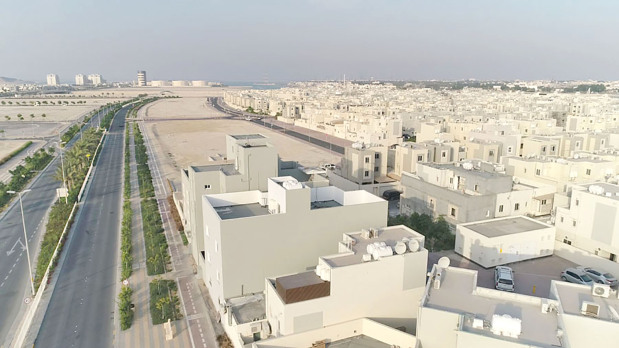
A VISIONARY proposal to erect a landmark sculpture at the entrance of Salman Town – a growing city that has quickly emerged as a symbol of modern Bahraini urban expansion – has been unanimously approved by the Northern Municipal Council during its regular weekly meeting.
Presented by area councillor Mohammed Al Dossary, the proposal has been forwarded to Municipalities Affairs and Agriculture Minister Wael Al Mubarak for review.
Developed as part of the kingdom’s housing and urban planning strategy, the city has become home to thousands of young families and citizens seeking a modern lifestyle in a well-planned environment.
Yet despite its infrastructure and clean layout, many residents and civic leaders have observed a lack of visual identity – a cultural marker that helps build a collective sense of place.

Mr Al Dossary
“Salman Town is more than just streets and buildings; it’s a growing community with aspirations, pride and a deep connection to this land,” said Mr Al Dossary.
“This sculpture will serve as a symbolic gateway, a beacon for residents and visitors alike.
“It will say: ‘This is Salman Town, and this is who we are’.”
In a presentation Mr Al Dossary pointed out a number of strategic goals and cultural justifications:
1. High residential density: With thousands of residents and more arriving each year, Salman Town requires visual elements that enrich the public environment and cater to the expectations of a rising urban population.
2. City beautification and civic pride: The sculpture will anchor beautification efforts across the town, transforming the entrance into a memorable and photogenic landmark and reflecting Bahrain’s heritage and forward-looking vision.
3. Navigational and symbolic role: Strategically placed at the town’s entrance, the sculpture will serve as a visual reference point and a symbol of welcome for visitors and newcomers.
4. Educational and cultural value: As a piece of public art, the sculpture is intended to reflect both the historical significance and future aspirations of the town – whether through abstract design, traditional motifs or modern architecture.
5. Reflection of global trends: In cities around the world – from London’s ‘Shard’ to Dubai’s ‘Frame’ and Qatar’s urban sculptures – public art has played a powerful role in crafting urban narratives and shaping collective memory. Salman Town seeks to join that global conversation.
6. Grassroots origin: Mr Al Dossary emphasised that the idea was community-driven.
“This wasn’t just a council initiative. Residents came forward asking for something that represents them, something that adds beauty and meaning to their environment. We listened,” stressed Mr Al Dossary.
Beyond aesthetics, the sculpture is envisioned to be part of a larger urban node, potentially accompanied by landscaped plazas, shaded rest areas, informational signage and spaces for cultural programming or seasonal events.
The area could also be integrated into tourism initiatives or educational programmes, offering school trips and walking tours that explore the art and story behind it.
“We want this to be more than just a statue,” he said.
“We want a living symbol, something that becomes part of daily life, where children take school photos, where families meet, where visitors stop and admire what Salman Town represents.”
If approved, the next steps will include community consultations, a design competition or artist commission and co-ordination with urban planners and architects to ensure that the sculpture fits seamlessly into the city’s aesthetic and logistical framework.
The Northern Municipal Council as explained by council chairman Dr Sayed Shubbar Al Wedaie sees this as a pilot model for similar projects across the kingdom, highlighting how art, community identity and urban development can work hand in hand.
“As Salman Town rises as a model for Bahrain’s urban future, this landmark sculpture may soon stand as a timeless tribute to the city’s values, ambitions and collective soul, a physical reminder that cities are not just built, but shaped by the people who call them home,” said the chairman.
mohammed@gdnmedia.bh