BAHRAINI schools provide a safe and welcoming environment for students on the spectrum, with bullying against them at a low level, according to a new research.
The survey, conducted by Arabian Gulf University (AGU) Master’s student Fatema Fardan, however, found that at least some autistic children had to put up with verbal bullying and called for preventive programmes to tackle the cases.
She surveyed 90 male and female teachers from public and private schools and found no significant differences in bullying trends based on the educator’s qualifications, experience, training, gender, or school type.
Ms Fardan is a researcher at Learning Difficulties and Developmental Disabilities Programme at the AGU’s College of Education, Administrative and Technical Sciences. She adopted a comparative descriptive methodology as part of the requirements for a Master’s degree in Autism, and applied a scale to measure various forms of bullying.
She explained that bullying takes multiple forms – verbal, physical, social bullying, cyberbullying and damage to personal property.
“Physical bullying involves aggressive behaviours causing physical harm to the victim such as pushing, kicking, or hitting,” Ms Fardan said in her study.
“Verbal bullying happens through the use of offensive words such as insults, shouting, threats and ridicule.
“Social bullying is aimed at socially isolating the victim through various tactics, like spreading rumours or influencing others to reject them.
“Finally, cyberbullying is carried out via digital platforms, by sending abusive messages or defaming victims on social media.”
The survey results showed that all forms of bullying were at a very low level – with verbal bullying the highest among the few cases and cyberbullying and damage to personal property being the lowest.
Though Bahrain’s schools were found to embrace and welcome students with Autism Spectrum Disorder (ASD), Ms Fardan recommended implementing specialised training programmes for detecting and addressing bullying in the classroom.
She also suggested enhancing the role of school counselling to provide psychological and social support for students with ASD, and developing more accurate measurement tools to identify indirect forms of bullying.
“Bullying directed at students with ASD is a critical issue globally due to its clear and long-term negative impacts across psychological and social dimensions,” said Ms Fardan.
“Victims of bullying often suffer from low self-esteem, increased levels of anxiety, depression and fear, which in turn affect their academic and professional performances, social relationships and overall lifestyle.”
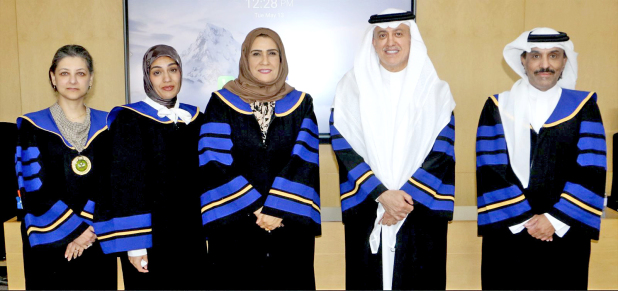
The research was supervised by Special Education professor and main supervisor Mariam Al Shurooqi and Department of Special Education associate professor and co-supervisor Dr Wid Daghustani.
They recommended more studies focusing on the effectiveness of preventive programmes in reducing bullying rates, exploring the impact of using digital technology in reducing cyberbullying and analysing the relationship between bullying and academic achievement in light of cultural and social differences.
The study was evaluated by a panel consisting of two Special Education professors – internal examiner Bandar Al Otaibi from the AGU and external examiner Ibrahim Al Othman from King Saud University.
In 2023, 300 educators from private and public schools across Bahrain were trained as part of a massive campaign to raise awareness on cyberbullying.
The training assisted educators in identifying the types of hazards that children encounter while exploring the digital world, such as cyberbullying, misinformation and inappropriate content.
Additionally, the Interior Ministry’s Anti-Violence and Addiction Programme, known as Ma’an (together) in Arabic, has reportedly educated students in more than 120 private and public schools across the country.
Community Police officers interact with students at kindergarten, primary, intermediate and secondary school level as part of the scheme, which is designed to encourage protection of communities from violence and bullying. Students are not only trained in social skills, but also anger management, better decision-making and communication skills.
nader@gdnmedia.com