

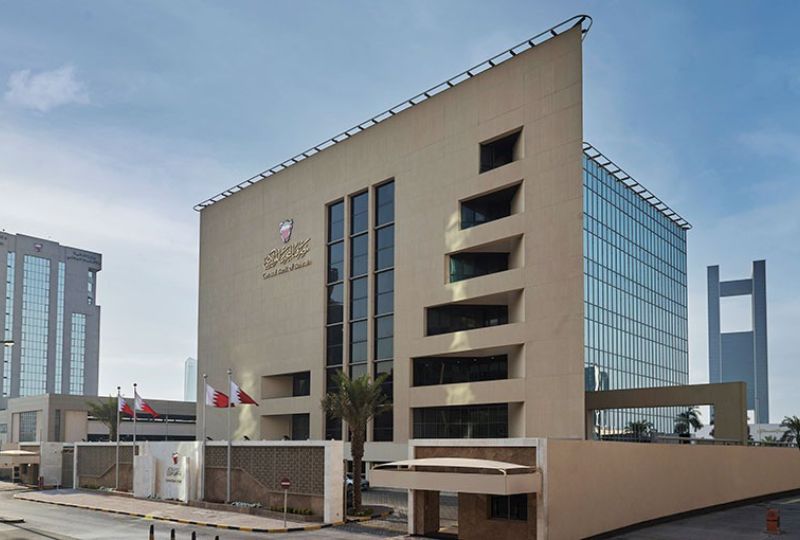
THE Central Bank of Bahrain (CBB) is betting on a dual strategy of digital infrastructure and talent development to usher the nation’s financial services sector into a new era of growth and stability.
CBB Governor Khalid Humaidan affirmed this priority during a fireside chat at the Fintech Forward 2025 event at Exhibition World Bahrain yesterday.
He stressed that digital advancements and stringent stability measures are crucial for maintaining the sector’s standing as Bahrain’s largest economic contributor.
Speaking with The Economist’s capital markets editor, Joshua Roberts, Mr Humaidan highlighted the CBB’s focus on cutting-edge technologies, particularly in payments and oversight.
“Digital infrastructure is paramount for the future of financial services,” he stated.
He positioned the CBB’s efforts on instant payments, where Bahrain is already a global leader, and on advanced supervision technology (SupTech) as top priorities.
Mr Humaidan detailed how the move to SupTech will dramatically boost the CBB’s regulatory efficiency.
“By moving to real-time access to licensee data, we can significantly improve safety and effectiveness. This will progress in phases, eventually leading to sophisticated predictive analysis,” he explained.
He underscored that the shift to a digital-first environment places a renewed emphasis on human capital.
“The skill set required in finance is rapidly becoming more digital, and our ability to produce and attract that digital talent will define our future success,” he noted, citing the establishment of international companies’ talent hubs in Bahrain as evidence of excellent progress.
The CBB Governor confirmed that the core challenge of balancing growth with stability is simplified by Bahrain’s single regulatory authority, which provides a holistic view of risks and eliminates contradictions.
He stressed that stability remains non-negotiable and is secured by focusing on key procedural pillars: compliance, risk governance, consumer protection, and systemic risk monitoring.
“This involves continuous benchmarking against successful jurisdictions globally to strike the right regulatory balance, shifting towards a more risk and principle-based system,” Mr Humaidan said.
He concluded by reinforcing the sector’s vital role, noting that financial services contribute 17 per cent of Bahrain’s GDP.
“It is a powerful source of foreign direct investment and high-paying employment, with the average salary being double that of the rest of the economy – and there is still ample room for growth,” he said.
avinash@gdnmedia.bh
&uuid=(email))