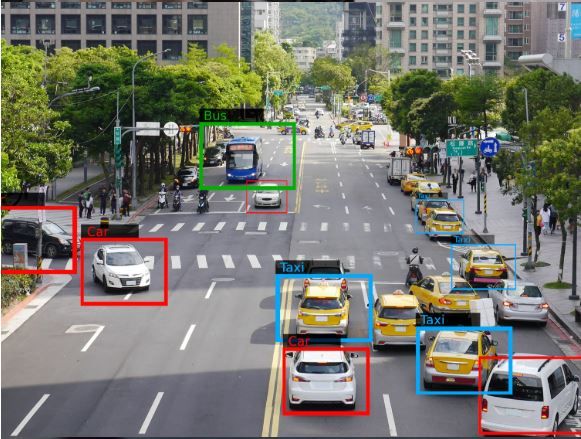
Bahraini legislators are seeking urgent clarification from government officials on the scope and privacy implications of new AI-powered traffic surveillance cameras set to be introduced across the country.
Parliament’s foreign affairs, defence and national security committee has formally requested a briefing from the Interior Ministry’s General Directorate of Traffic on the deployment of the new system, which includes 500 smart cameras integrated with artificial intelligence technologies.
Committee chairman Hassan Bukhammas stressed the need for transparency before the cameras are installed.
“We fully support efforts to modernise the traffic system and enhance road safety, but we must also ensure that citizens’ privacy is not compromised,” he said. “The scope, purpose and data-handling procedures of these cameras must be clearly explained to Parliament.”
The GDN reported in August that Beyon had signed a strategic partnership agreement with the Interior Ministry to implement the AI-driven monitoring system. The deal was announced during a Traffic Council meeting chaired by Interior Minister and council chairman General Shaikh Rashid bin Abdulla Al Khalifa.
Under the agreement, Beyon Solutions – part of the Beyon Group – will supply the General Directorate of Traffic with 500 advanced surveillance cameras. These smart devices will utilise AI technology to detect traffic violations, improve enforcement and enhance public safety.
However, Mr Bukhammas reiterated that technological advancement must be balanced with accountability and oversight. “We have to understand how data will be collected, stored and used. Who will have access? How long will data be retained? These are fundamental questions that need answers before such a system is rolled out.”
The committee plans to meet relevant officials in the coming weeks to review technical details and ensure that proper safeguards are in place to protect civil liberties.
“This isn’t about opposing technology – it’s about ensuring it is implemented responsibly,” Mr Bukhammas added.

Public concerns ... answers needed
The AI camera initiative is part of a broader effort to modernise Bahrain’s infrastructure and reduce traffic violations, but legislators are making it clear that public trust must not be undermined in the process.
The General Directorate of Traffic is expected to provide a full technical breakdown of the AI system following the committee’s request.
“It’s our responsibility to ask the tough questions before the system is installed,” said Mr Bukhammas.
“We want clear answers on the system’s real-time capabilities and whether facial recognition or licence plate tracking features will be included.
“We need to understand whether this is purely about catching speeding drivers or if it goes further – into mass surveillance,” he warned.

Mr Bukhammas
While the cameras are expected to help improve discipline and enhance public safety, MPs are stressing the importance of transparency in the rollout process. “The public must be reassured that their rights are protected,” Mr Bukhammas said. “We are pushing for clear legislation or regulations to govern how this technology is used.”
He also called for the Interior Ministry to work closely with Parliament on any future expansion of surveillance infrastructure. “We want co-operation, not conflict. Our aim is to build a system that is both safe and respectful of citizens’ freedoms,” he added.
Tougher penalties, including fines and imprisonment, for traffic violations went into effect in Bahrain in August to put the brakes on reckless driving.
The implementation follows a decree issued by His Majesty King Hamad, amending certain provisions of the Traffic Law issued under Law 23 of 2014, based on a proposal by His Royal Highness Prince Salman bin Hamad Al Khalifa, Crown Prince and Prime Minister, and following the approval of the Cabinet.
According to new rules, those who jump a red light shall be punished with imprisonment for a period not exceeding six months and receive fines of between BD200 and BD1,000.
Those who fail to reduce speed while driving in populated areas or entering curves or intersections, especially when approaching schools, hospitals or houses of worship, face a fine of between BD50 and BD100. If it results in an accident that causes damage to public or private property, the penalty increases to imprisonment of between three months and one year, and a fine of between BD1,000 and BD3,000.
A person who consumed alcohol or drugs while driving, especially if it causes them to lose control of the vehicle or impairs an ability to drive, will be punished with imprisonment of between two months and one year, and a fine of between BD1,000 and BD2,000.
The new penalties came shortly after Bahraini parents and one of their children were killed in an horrific road accident in Saar on May 30 after a head-on collision involving a driver under the influence of drugs and alcohol.
mohammed@gdnmedia.bh