


A NEW Press, printing and publishing law was unanimously approved by the Shura Council during its weekly session yesterday.
The Publications and Digital Media Law of 2002 represents the most comprehensive overhaul of Bahrain’s media regulations in more than two decades and is a landmark move reflecting the kingdom’s ongoing commitment to media development and freedom of expression.
Information Affairs Minister Dr Ramzan Al Nuaimi described the approval as “a national achievement that propels Bahrain’s media sector towards greater professionalism and modernisation”.
Speaking in the upper chamber of the National Assembly, he emphasised that the law “embodies the deep partnership and integration between the legislative and executive authorities in achieving major national projects”, in line with the vision of His Majesty King Hamad and the directives of His Royal Highness Prince Salman bin Hamad Al Khalifa, Crown Prince and Prime Minister.
“The government’s close co-ordination with both chambers of the legislature has led to positive consensus that serves Bahraini society and strengthens every sector,” he said.
He added that the next phase will involve “co-ordinated implementation of the law through clear regulations governing both print and electronic media, ensuring that Bahrain’s message remains professional, responsible and aligned with the kingdom’s development goals”.
Editors-in-chief, senior journalists and representatives of the Bahrain Journalists Association led by board chairman Isa Al Shaiji attended the session.
Shura Council chairman Ali Saleh Al Saleh hailed the law’s passage as “a new chapter in Bahrain’s democratic and media journey.
“It marks a new milestone that will enhance the national and enlightening role of Bahraini media and reinforce journalists’ commitment to freedom of expression with integrity and objectivity.”
He reaffirmed the council’s dedication to “continuously modernising Bahrain’s media legislation to keep pace with rapid changes in communication technologies, strengthen responsible freedom and support national development”.
Shura services committee chairperson Dr Jameela Al Salman said the new law fulfils the royal vision for a constitutional framework that upholds freedom of opinion and expression while modernising Bahrain’s media landscape.
The law abolishes imprisonment for media-related offences, replacing it with financial penalties – a measure that safeguards journalists’ rights and reflects Bahrain’s confidence in its judiciary and commitment to responsible freedom.
Among its provisions, the law prohibits pre-trial detention in media-related cases and requires that all existing digital platforms regularise their status within six months of enactment, obtaining proper licences and ensuring editorial accountability similar to print outlets but under flexible procedures suitable for the digital age.
Fines of up to BD5,000 may be imposed on those launching unlicensed publications or operating unauthorised media facilities, while editors failing to publish required corrections within three days could face fines ranging from BD1,000 to BD10,000.
However, corrections made voluntarily before legal action is launched can lead to the waiver of penalties.
Financial and economic affairs committee chairman Khalid Al Maskati said replacing imprisonment with fines “shows the legislature’s trust in the judiciary and its support for freedom of opinion away from custodial penalties”.
He also underlined the law’s importance in light of rapid technological advancements, especially with the spread of artificial intelligence tools capable of producing fabricated videos and fake content.
“This confirms the necessity of such legislation to regulate the publication of electronic content and protect society from misinformation,” he said.
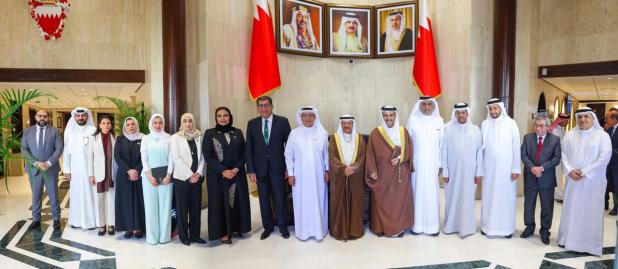
Shura Council, government and media representatives ahead of the session yesterday
Shura member Dr Bassam Albinmohammed stressed the need for flexible legislation that “adapts to the challenges faced by journalists, especially amid declining revenues from traditional advertising and the rise of fast-moving digital media”.
He also highlighted that substituting the term “disciplinary action” with “accountability” elevates Bahrain’s legal philosophy toward reformative justice and called for stronger protection of intellectual property rights in journalism.
Shura foreign affairs, defence and national security committee chairman and former information minister Dr Ali Al Rumaihi praised Bahrain’s media institutions as “nationally committed and professionally managed”, adding that “Bahraini journalism has never sought to harm the nation or interfere in others’ affairs”.
He emphasised that “freedom of expression is a means, not an end, and must always serve the public interest.”
Nancy Khadoury, another Shura member, noted that while the legislation represented a major step forward, broader consultation with economic sectors, entrepreneurs and digital content creators would have further enriched the discussion.
“Since the law directly impacts online freedom of expression, it would have been valuable to review it also from a human rights perspective,” she said.
With both the Shura Council and Parliament approving the legislation, it has now been referred to His Majesty King Hamad for ratification.
“The law is expected to usher in a more transparent, accountable and innovation-friendly media environment – one that protects journalists, supports digital transformation and reflects Bahrain’s standing as a regional model balancing openness with legal responsibility,” said Shura Council second vice-chairwoman Dr Jihad Al Fadhel.
mohammed@gdnmedia.bh
&uuid=(email))